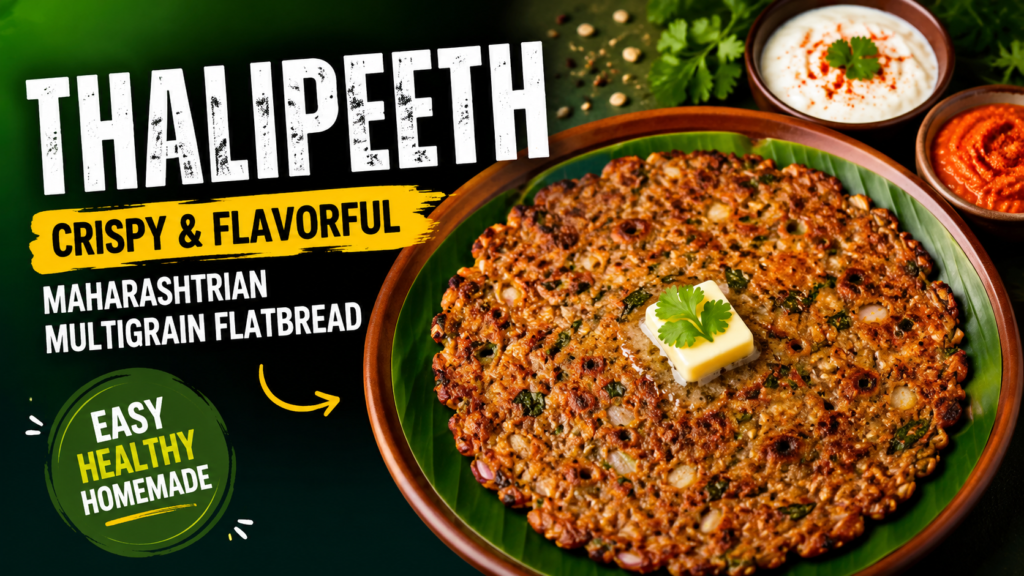
Thalipeeth Recipe: Crispy Maharashtrian Multigrain Flatbread You Must Try at Home
By Kaushik Brahmakshatriya
Published On 04 June 2026.
Thalipeeth recipe
What Is Thalipeeth?
Thalipeeth is a traditional Maharashtrian flatbread that has been a staple in Indian homes for generations. Unlike regular roti or paratha, this dish is made from bhajani flour — a special blend of roasted grains, legumes, and spices ground together. The result is a thick, crispy, and deeply flavourful flatbread that is both nutritious and incredibly satisfying.
Whether you enjoy it as a morning breakfast with white butter (loni), a light dinner, or a travel-friendly snack, Thalipeeth fits every occasion. It is naturally high in protein and fiber, making it a wholesome choice for health-conscious eaters.
Ingredients for Thalipeeth (Serves 4)
| Ingredient | Quantity | Purpose |
| Bhajani flour (or multigrain flour) | 2 cups | Main base of the dough |
| Onion, finely chopped | 1 medium | Adds moisture and flavour |
| Fresh coriander leaves, chopped | 3 tbsp | Adds freshness and aroma |
| Green chillies, finely chopped | 2 | Provides heat |
| Ginger paste | 1 tsp | Enhances flavour |
| Cumin seeds | ½ tsp | Earthy spice note |
| Turmeric powder | ¼ tsp | Colour and anti-inflammatory benefits |
| Red chilli powder | ½ tsp | Spice and colour |
| Salt | To taste | Seasoning |
| Water | As needed | For kneading the dough |
| Oil or ghee | For roasting | Crispy texture |
No bhajani flour at home? Simply mix equal portions of jowar (sorghum), bajra (pearl millet), rice flour, besan (chickpea flour), and wheat flour. Dry roast each before grinding or mixing — this gives you the closest substitute to traditional bhajani.
Step-by-Step Thalipeeth Recipe
Step 1 – Prepare the Dough
In a large mixing bowl, combine bhajani flour, chopped onion, coriander, green chillies, ginger paste, cumin seeds, turmeric, red chilli powder, and salt. Mix all dry and wet ingredients well. Gradually add water and knead into a soft, pliable dough. Unlike chapati dough, this should be slightly sticky and moist. Let it rest for 10 minutes.
Step 2 – Shape the Thalipeeth
Wet your palms lightly with water. Take a medium-sized ball of dough and place it on a greased plastic sheet or banana leaf. Using your fingers, gently pat and press the dough outward into a round, flat disc about 6–7 inches in diameter. Make 3–4 small holes in the center — this helps it cook evenly and allows oil to seep in for extra crispiness.
Step 3 – Cook on Tawa
Heat a cast iron tawa or non-stick pan on medium-high heat. Transfer the shaped thalipeeth onto the tawa. Cook for 2–3 minutes until the bottom turns golden and slightly charred. Drizzle oil or ghee into the holes and around the edges. Flip carefully and cook the other side for another 2–3 minutes until crisp and cooked through.
Step 4 – Serve Hot
Remove from tawa and serve immediately with fresh white butter, curd, or green chutney.
Nutritional Overview (Per Serving – Approximate)
| Nutrient | Amount Per Thalipeeth | Daily Value (%) |
| Calories | 180–210 kcal | ~9% |
| Protein | 6–8 g | ~12% |
| Dietary Fibre | 4–5 g | ~16% |
| Carbohydrates | 28–32 g | ~10% |
| Fat (with ghee) | 6–8 g | ~9% |
| Iron | 2–3 mg | ~11% |
Serving Suggestions and Variations
Thalipeeth is wonderfully versatile. Here are popular ways to enjoy it:
- Classic Style: Fresh white butter (loni) + hot chai — the most authentic Maharashtrian way
- Healthy Style: Low-fat curd + mint chutney
- Spicy Style: Garlic-red chilli thecha (a coarse Maharashtrian chutney)
- Variation – Sprout Thalipeeth: Add boiled sprouted moong to the dough for extra protein
- Variation – Leftover Rice Thalipeeth: Mix cooked rice into the dough for a softer texture
People Also Ask – Thalipeeth FAQ
Q1. What is bhajani flour and where can I buy it?
Bhajani flour is a roasted multigrain flour blend unique to Maharashtra. It typically contains sorghum, millet, rice, chickpea, wheat, and sometimes sesame. You can find it in Maharashtrian grocery stores, local chakki shops, or online platforms like Amazon India and BigBasket.
Q2. Can Thalipeeth be made gluten-free?
Yes. Simply skip the wheat flour from the bhajani blend and use a combination of rice flour, jowar, bajra, and besan. The result is a naturally gluten-free flatbread that tastes almost identical to the original.
Q3. How long can Thalipeeth be stored?
Cooked Thalipeeth stays fresh for up to 1 day at room temperature and up to 2 days in the refrigerator. Reheat on a tawa with a few drops of ghee for best texture. Raw dough can be refrigerated for up to 24 hours.
Q4. Is Thalipeeth healthy?
Absolutely. Because it is made from multiple grains and legumes, Thalipeeth offers a balanced profile of complex carbohydrates, plant protein, and dietary fibre. It keeps you full longer and provides sustained energy, making it an excellent breakfast option.
Q5. What is the difference between Thalipeeth and Akki Roti?
Both are thick flatbreads made without a rolling pin, but Akki Roti (Karnataka) uses plain rice flour as the base, while Thalipeeth uses a roasted multigrain bhajani flour blend. The flavour, texture, and nutritional profile are different. Thalipeeth is denser and more flavourful due to the mixed grain composition.
Try this Thalipeeth recipe at home and bring a taste of Maharashtra to your kitchen. If you loved this recipe, share it with your friends
