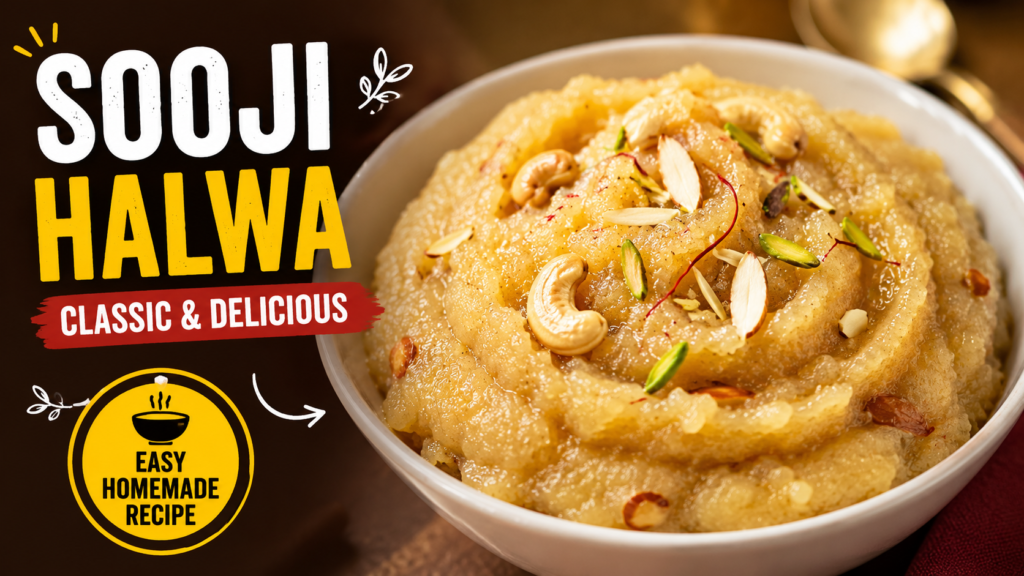
Sooji Halwa Recipe: The Classic Indian Semolina Dessert You’ll Make Every Week
By Kaushik Brahmakshatriya
Published On 27 June 2026=
Sooji Halwa Recipe
There are very few sweets in Indian kitchens that carry as much warmth and nostalgia as Sooji Halwa. Whether served during festivals, morning pujas, or after a Sunday family meal, this golden semolina pudding has earned its place as one of India’s most beloved traditional desserts. The best part? It comes together in just 20 minutes using simple pantry ingredients.
In this post, you’ll find a foolproof Sooji Halwa recipe with tips, ingredient details, and answers to common questions every home cook asks.
What is Sooji Halwa?
Sooji Halwa, also called Sheera or Rava Kesari in different regions of India, is a thick, soft pudding made by roasting semolina (sooji/rava) in ghee, then cooking it with sugar and water or milk until it reaches a rich, smooth consistency. It is lightly flavored with cardamom and garnished with nuts and raisins for an extra layer of taste and texture.
Ingredients You Need
| Ingredient | Quantity | Purpose |
| Sooji (Semolina/Rava) | 1 cup | Main base of the halwa |
| Ghee (Clarified Butter) | 4 tablespoons | Roasting and richness |
| Sugar | ¾ cup | Sweetness |
| Water or Milk | 2.5 cups | Cooking liquid |
| Green Cardamom Powder | ½ teaspoon | Fragrance and flavor |
| Cashews & Raisins | 2 tablespoons each | Garnish and texture |
| Saffron Strands (optional) | A pinch | Color and aroma |
Step-by-Step Sooji Halwa Recipe
Step 1 — Roast the Sooji:
Heat ghee in a heavy-bottomed pan on medium flame. Add sooji and stir continuously for 8 to 10 minutes until it turns golden brown and releases a nutty aroma. Do not rush this step — proper roasting is the secret to a great halwa.
Step 2 — Prepare the Liquid:
In a separate saucepan, bring water or milk to a gentle boil. If using saffron, dissolve it in 2 tablespoons of warm milk and add it here.
Step 3 — Combine:
Carefully pour the hot liquid into the roasted sooji while stirring continuously to avoid lumps. The mixture will splatter briefly, so keep the flame on low and stir confidently.
Step 4 — Add Sugar:
Once the water is absorbed and the mixture thickens, add sugar and cardamom powder. Stir well and cook for another 3 to 4 minutes until the halwa pulls away from the sides of the pan.
Step 5 — Garnish and Serve:
Fry cashews and raisins in a teaspoon of ghee separately and fold them in. Serve warm.
Nutritional Overview (Per Serving — Approximate)
| Nutrient | Amount per Serving |
| Calories | 280–310 kcal |
| Carbohydrates | 42 g |
| Protein | 4 g |
| Fat | 11 g |
| Sugar | 20 g |
| Fiber | 1 g |
Note: Values are approximate and vary based on ingredient quantities used.
Pro Tips for the Best Sooji Halwa
- Always roast sooji on medium-low heat. High heat causes uneven browning and a raw center.
- Use milk instead of water for a creamier, richer halwa.
- Adding a tablespoon of extra ghee at the end gives the halwa a beautiful glossy finish.
- Brown sugar or jaggery can replace white sugar for a deeper, earthier flavor.
Frequently Asked Questions (FAQ)
Q1. Can I make Sooji Halwa without ghee?
Yes, but ghee is what gives Sooji Halwa its signature rich taste and aroma. You can use unsalted butter as a substitute, though the flavor will differ slightly. Avoid using refined oil, as it changes the texture significantly.
Q2. How long does Sooji Halwa stay fresh?
When stored in an airtight container at room temperature, Sooji Halwa stays fresh for up to 24 hours. In the refrigerator, it keeps well for 2 to 3 days. Reheat with a splash of water or milk and a small amount of ghee to restore its soft texture.
Q3. Can I use milk instead of water in Sooji Halwa?
Absolutely. Milk makes the halwa noticeably creamier and richer in taste. Many traditional recipes from North India specifically use warm milk, while South Indian Sheera versions often combine both milk and water for a balanced consistency.
Q4. Is Sooji Halwa healthy?
Sooji Halwa provides quick energy from carbohydrates and healthy fats from ghee, making it a good option for prasad or a light morning meal in small portions. However, due to its sugar content, it should be enjoyed in moderation as part of a balanced diet.
Q5. Can I add fruits to Sooji Halwa?
Yes! Sliced bananas, finely grated carrots, or even apple pieces can be folded into the halwa during the final cooking stage. Banana Sooji Halwa is especially popular for babies and young children as a nutritious first food.
Final Thoughts
Sooji Halwa is the kind of recipe that feels like home in every spoonful. Once you master the roasting technique, this dessert becomes second nature in your kitchen. Whether you are making it for a festival, prasad, or a quick sweet craving on a rainy evening — this recipe delivers every single time.
