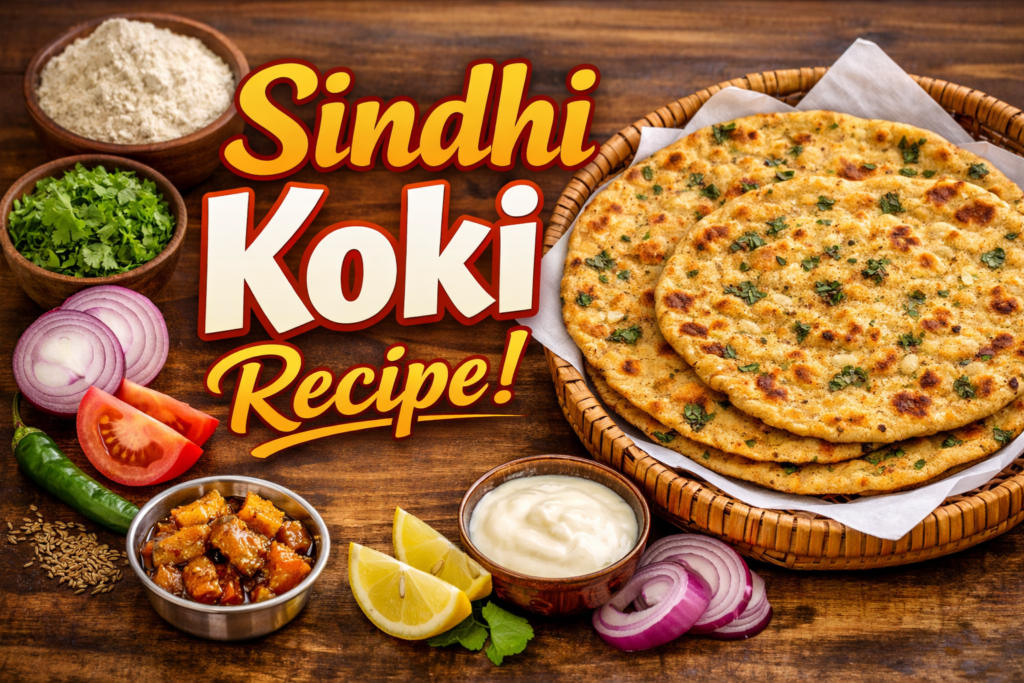
Sindhi Koki: The Ultimate Crispy & Flaky Spiced Flatbread Recipe
27, January 2026. By -Kaushik
If there is one dish that defines the soul of Sindhi cuisine, it is the Sindhi Koki. Unlike a regular paratha or roti, a Koki is a thick, flaky, and spice-infused flatbread that sits somewhere between a biscuit and a paratha. It is traditionally served for breakfast, but its long shelf life makes it a favorite for travelers and lunchboxes alike.
In this blog, we’ll walk you through the authentic way to make this crispy delight that pairs perfectly with a bowl of curd, some papad, and a hot cup of chai.
What Makes Sindhi Koki Special?
The secret to a perfect Koki lies in two things: the “Moyen” (shortening) and the double-rolling technique. Unlike dough for rotis, Koki dough is not kneaded smooth. It remains slightly crumbly, which creates those signature flaky layers. The addition of onions, green chilies, and dried pomegranate seeds (Anardana) gives it a unique tangy-spicy flavor profile.
Ingredients You’ll Need
To make 4 to 5 medium-sized Kokis, gather the following:
Whole Wheat Flour (Atta): 2 Cups
Onions: 2 medium (finely chopped)
Green Chilies: 2–3 (finely chopped)
Fresh Coriander: 1/2 cup (finely chopped)
Cumin Seeds (Jeera): 1 tsp
Anardana (Dried Pomegranate Seeds): 1 tsp (crushed) or Amchur powder
Red Chili Powder: 1/2 tsp
Oil or Ghee: 3-4 tbsp (for the dough) + extra for roasting
Salt: To taste
Water: As needed (very little is used)
Step-by-Step Instructions
1. Preparing the Flour Base
In a large mixing bowl, add the wheat flour, salt, cumin seeds, red chili powder, and crushed anardana. Mix the dry ingredients well.
2. Adding the Aromatics
Add the finely chopped onions, green chilies, and fresh coriander. The onions will release some moisture, so it’s important to mix them into the flour before adding any water.
3. The “Moyen” Step (Crucial)
Pour in 3-4 tablespoons of oil or melted ghee. Rub the flour between your palms until it reaches a breadcrumb-like consistency. When you hold a fistful of flour, it should hold its shape. This ensures the Koki turns out “Khasta” (crispy).
4. Kneading the Dough
Add water, one tablespoon at a time. Do not over-knead. You just want to bring the ingredients together into a firm, stiff dough. If the dough becomes soft, the Koki will lose its crunch.
5. The Double-Roasting Technique
This is the traditional Sindhi method:
Divide the dough into large balls.
Roll a ball into a small, thick disc (about 3 inches).
Place it on a hot tawa (griddle) for just 30 seconds on each side. This is called “half-cooking.”
Remove it, place it back on the rolling board, and roll it out again into a larger, thick circle (about 1/2 cm thickness). This prevents the edges from breaking and locks in the texture.
6. Final Roasting
Place the rolled Koki on the tawa over low to medium flame. Prick the surface slightly with a knife or fork so it cooks evenly inside. Apply ghee or oil on both sides and roast until golden brown spots appear and the exterior becomes biscuit-like and crunchy.
Pro Tips for the Best Koki
Don’t Skimp on Fat: The oil/ghee inside the dough is what creates the flakiness.
Low Flame is Key: Never cook Koki on high heat. It needs time to cook through its thickness to achieve that perfect crunch.
Finely Chop Onions: If onions are too large, the Koki will break while rolling.
Serving Suggestions
Sindhi Koki is incredibly versatile. Enjoy it with:
*Fresh homemade curd (Dahi)
*A dollop of white butter
*Pickle or Papad
*Fried potatoes (Aloo Tuk)
Disclaimer :
The recipes and nutritional information shared on this Blog are for informational purposes only. While I strive to provide accurate instructions, results may vary based on individual cooking skills, equipment, and ingredient quality.
