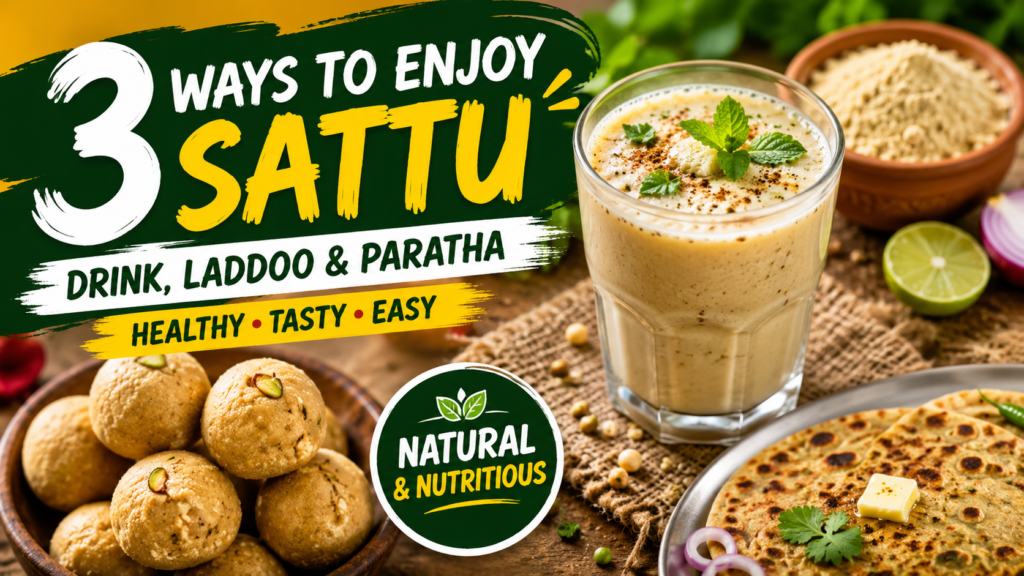
Sattu Recipe: How to Make Sattu Drink, Laddoo & Paratha at Home
By Kaushik Brahmakshatriya
Published On 07 June 2026.
Sattu Recipe
Sattu is one of India’s oldest and most powerful superfoods — a humble, protein-rich flour made from roasted Bengal gram (chana). Widely loved across Bihar, Jharkhand, Uttar Pradesh, and Rajasthan, Sattu has quietly become a favourite among fitness enthusiasts and health-conscious foodies across the country.
Whether you want a refreshing summer Sattu drink, energy-packed Sattu Laddoo, or a wholesome Sattu Paratha, this complete recipe guide covers everything you need to know — from ingredients to preparation steps, nutritional value, and expert tips.
What Is Sattu and Why Is It So Healthy?
Sattu is a coarse flour prepared by dry-roasting Bengal gram (chana) and then grinding it. Unlike refined flours, Sattu retains its natural fibre, protein, and minerals. It is naturally cooling in nature, making it especially popular during the hot summer months as a refreshing drink.
Sattu is gluten-free, easy to digest, and incredibly budget-friendly. It works as a complete meal replacement when blended with the right ingredients. Whether consumed sweet or salty, hot or cold — Sattu adapts beautifully to every palate and season.
Ingredients Required for Sattu Recipes
Ingredients for Three Sattu Preparations
| Ingredient | Sattu Drink | Sattu Laddoo | Sattu Paratha |
| Sattu flour | 4 tbsp | 1 cup | 1 cup |
| Water | 1 glass | — | — |
| Jaggery / Sugar | 1 tsp (optional) | 3 tbsp (jaggery) | — |
| Salt | Pinch | — | ½ tsp |
| Lemon juice | 1 tbsp | — | — |
| Roasted cumin powder | ½ tsp | — | ½ tsp |
| Green chilli (chopped)) | — | — | 1 (finely chopped |
| Ghee | — | 2 tbsp | For roasting |
| Cardamom powder | — | ½ tsp | — |
| Ajwain (carom seeds) | — | — | ¼ tsp |
| Coriander leaves | — | — | 1 tbsp (chopped) |
| Whole wheat dough | — | — | As required |
Step-by-Step Sattu Recipes
1. Sattu Drink (Sattu Sharbat) — Summer Cooler
Preparation Time: 5 minutes | Serves: 2
Steps:
1.Take 4 tablespoons of Sattu flour in a large glass or bowl.
2.Add a pinch of salt, ½ tsp roasted cumin powder, and 1 tbsp fresh lemon juice.
3.For a sweet version, add 1 tsp jaggery powder or sugar.
4.Mix in 1 glass of chilled water and stir vigorously until no lumps remain.
5.Pour into glasses, add ice cubes if desired, and serve immediately.
Pro Tip: Add a few drops of raw mustard oil and a pinch of black salt for an authentic Bihar-style Sattu drink.
2. Sattu Laddoo — Traditional Energy Balls
Preparation Time: 15 minutes | Serves: 10–12 laddoos
Steps:
1.Heat ghee in a pan on low flame. Add Sattu flour and roast lightly for 2–3 minutes until a warm aroma rises.
2.Remove from heat. Add jaggery powder, cardamom powder, and mix well.
3.Let the mixture cool slightly. Grease your palms with a little ghee.
4.Take small portions and roll them firmly into round laddoos.
5.Store in an airtight container at room temperature for up to one week.
Pro Tip: Add 1 tbsp of finely chopped dry fruits (almonds, cashews) to increase the nutritional value of each laddoo.
3. Sattu Paratha — Wholesome Stuffed Flatbread
Preparation Time: 25 minutes | Serves: 4 parathas
Steps:
1.In a bowl, combine Sattu flour with chopped green chilli, coriander leaves, ajwain, salt, roasted cumin powder, and a drizzle of mustard oil.
2.Mix well to form a crumbly but bindable stuffing. Add 1–2 tsp water if needed.
3.Divide the whole wheat dough into equal balls. Flatten each ball, place 2 tbsp of Sattu filling in the centre, and seal the edges.
4.Roll gently into a round paratha without breaking the filling.
5.Cook on a hot tawa with ghee on both sides until golden brown spots appear.
6.Serve hot with green chutney, pickle, and curd.
Sattu Nutritional Value (Per 100g)
Nutritional Profile of Sattu Flour
| Nutrient | Amount per 100g |
| Calories | 413 kcal |
| Protein | 22–25 g |
| Carbohydrates | 65 g |
| Dietary Fibre | 3–4 g |
| Fat | 6–7 g |
| Iron | 8 mg |
| Calcium | 50 mg |
| Glycemic Index | Low |
Sattu is particularly valuable for its high protein content — comparable to many commercial protein powders — but at a fraction of the cost and without artificial additives.
Sattu Recipe Variations at a Glance
Popular Sattu Recipe Variations Across India
| Recipe Type | Region | Flavour Profile | Best Served |
| Sattu Sharbat (sweet) | Bihar, UP | Sweet, earthy, refreshing | Chilled as summer drink |
| Sattu Sharbat (namkeen) | Bihar, Jharkhand | Salty, tangy, spiced | Cold as instant energy drink |
| Sattu Paratha | Bihar, Punjab | Spicy, wholesome | Breakfast / lunch with curd |
| Sattu Laddoo | Rajasthan, UP | Sweet, ghee-rich | Evening snack / festive sweet |
| Sattu Stuffed Karela | Bihar | Bitter-spicy | Main course side dish |
| Sattu Roti | Jharkhand | Plain, earthy | Dinner with dal |
Expert Tips for the Best Sattu Recipe Results
- Always use freshly ground Sattu for the best flavour. Packaged Sattu is convenient but stone-ground local Sattu tastes far superior.
- When making Sattu Paratha, always mix the stuffing with a touch of mustard oil — it prevents the filling from turning dry inside.
- For diabetics, the namkeen (salty) Sattu drink with no added sugar is an excellent low-GI meal replacement option.
- Children can be given Sattu Laddoos as a natural, chemical-free energy snack before school.
Frequently Asked Questions (FAQ) on Sattu Recipe
Q1. Is Sattu the same as Besan (gram flour)?
No. While both come from chana, Sattu is made from roasted Bengal gram and has a nuttier, earthier flavour. Besan is made from raw, dried Bengal gram and is used for binding and batter-making. They are not interchangeable in recipes.
Q2. Can Sattu be consumed daily?
Yes, Sattu is safe and beneficial for daily consumption. 2–4 tablespoons per day for adults is considered an ideal amount. It supports digestion, keeps you full longer, and provides sustained energy throughout the day.
Q3. Is Sattu good for weight loss?
Absolutely. Sattu is high in fibre and protein, which promotes satiety and reduces unnecessary snacking. A glass of Sattu drink in the morning can effectively replace a heavier breakfast while keeping calorie count low.
Q4. Can people with diabetes eat Sattu?
Yes. Sattu has a low glycemic index, meaning it does not cause sudden spikes in blood sugar levels. The salty Sattu drink without jaggery or sugar is particularly recommended for people managing diabetes.
Q5. How long can homemade Sattu Laddoos be stored?
Homemade Sattu Laddoos stay fresh for 7–10 days at room temperature in an airtight container. In the refrigerator, they can last up to 3 weeks without losing flavour or texture.
Q6. Can I make Sattu at home from scratch?
Yes! Dry roast Bengal gram (chana) in a heavy-bottomed pan until it turns lightly golden and aromatic. Let it cool completely, then grind it into a coarse-to-fine flour using a mixer grinder. Homemade Sattu is fresher and more flavourful than store-bought options.
Final Thoughts
Sattu is not just a recipe — it is a nutritional legacy passed down through generations of Indian households. Rich in protein, cooling by nature, endlessly versatile in preparation, and surprisingly delicious in every form, Sattu deserves a permanent place in every modern Indian kitchen.
Whether you start your morning with a refreshing Sattu drink, pack Sattu Laddoos as an energy snack, or serve Sattu Paratha for a satisfying weekend breakfast — every bite connects you to centuries of wholesome Indian food wisdom.
Try one of these Sattu recipes this week and let the ancient superfood work its magic on your health!
