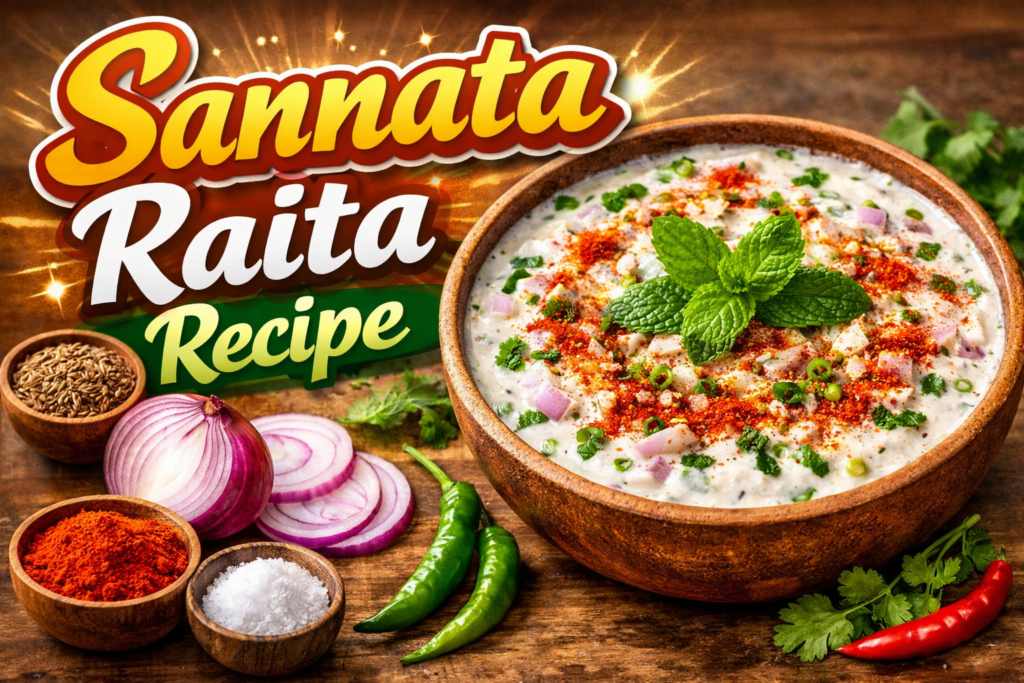
Sannata Raita Recipe:
03, February 2026. By -Kaushik
If you are a fan of North Indian cuisine, you have likely tried Boondi Raita or Pineapple Raita. But have you heard of Sannata Raita?
Originating from the heart of Uttar Pradesh and Rajasthan, “Sannata” literally translates to “pin-drop silence.” Legend has it that this raita is so thin, spicy, and effective for digestion that it settles your stomach into a state of calm silence after a heavy meal. Unlike your typical thick yogurt dips, Sannata Raita is thin, watery, and packed with a smoky, pungent punch.
Let’s unlock the secret to this traditional digestive tonic that is currently taking the culinary world by storm!
What Makes Sannata Raita Special?
Unlike the creamy, thick raitas served in restaurants, Sannata Raita has a consistency closer to Chaas (buttermilk). Its defining feature is the Dhungar method—a traditional charcoal smoking technique—and its heavy use of roasted cumin and black salt.
It is traditionally served with heavy meals like Daal Baati Choorma, Poori Sabzi, or spicy Biryanis to help prevent bloating and aid digestion.
Ingredients You’ll Need
Plain Yogurt (Curd): 1 cup (fresh and not too sour).
Water: 2 to 3 cups (to achieve a thin, pouring consistency).
Boondi: ¼ cup (plain or spicy).
Black Salt (Kala Namak): 1 teaspoon (the secret to the digestive benefit).
Roasted Cumin Powder (Bhuna Jeera): 1.5 teaspoons.
Red Chili Powder: ½ teaspoon (adjust to your spice preference).
Dry Mint Powder: ½ teaspoon.
Fresh Coriander: 1 tablespoon, finely chopped.
For the Smokey Tadka (Dhungar):
A small piece of natural charcoal.
½ teaspoon Cumin seeds.
A pinch of Hing (Asafoetida).
½ teaspoon Ghee.
Step-by-Step Instructions
1. Prepare the Base
In a large mixing bowl, whisk the yogurt until it is completely smooth. Gradually add water while whisking. The goal is a thin, watery consistency—much thinner than a standard raita.
2. Season the Liquid
Add the black salt, roasted cumin powder, red chili powder, and dry mint powder. Stir well. At this stage, add the boondi and freshly chopped coriander.
3. The “Sannata” Magic: The Charcoal Smoke
This is the most important step for the authentic flavor:
*Hold a piece of charcoal over a gas flame using tongs until it becomes red hot.
*Place a small steel cup (or a foil bowl) in the center of the raita bowl so it floats.
*Place the red-hot charcoal inside the small cup.
*Sprinkle cumin seeds and a pinch of Hing over the coal, and immediately pour half a teaspoon of ghee over it.
*As soon as it starts releasing thick white smoke, cover the raita bowl with a heavy lid for 2–3 minutes.
4. Final Touch
Remove the lid and the charcoal cup. Give the raita a gentle stir to trap the smoky aroma within the liquid. Your Sannata Raita is ready!
Chef’s Tips for the Best Sannata Raita
Consistency is Key: Do not be afraid of the water. Sannata is meant to be drunk as much as it is eaten.
The Salt Balance: Black salt is essential for the authentic taste; avoid substituting it entirely with regular table salt.
Serve Chilled: While the flavors develop at room temperature, it tastes best when served slightly chilled.
Health Benefits
Sannata Raita isn’t just a side dish; it’s a functional food. The Hing and Black Salt act as powerful anti-flatulence agents, while the probiotics in the thin curd help soothe the stomach lining after a spicy meal.
Conclusion
Sannata Raita is a testament to the ancient Indian wisdom of balancing flavor with gut health. It’s smoky, spicy, tangy, and incredibly refreshing. The next time you host a dinner with a heavy main course, skip the soft drinks and serve this traditional digestive marvel instead.
Disclaimer :
The recipes and nutritional information shared on this Blog are for informational purposes only. While I strive to provide accurate instructions, results may vary based on individual cooking skills, equipment, and ingredient quality.
