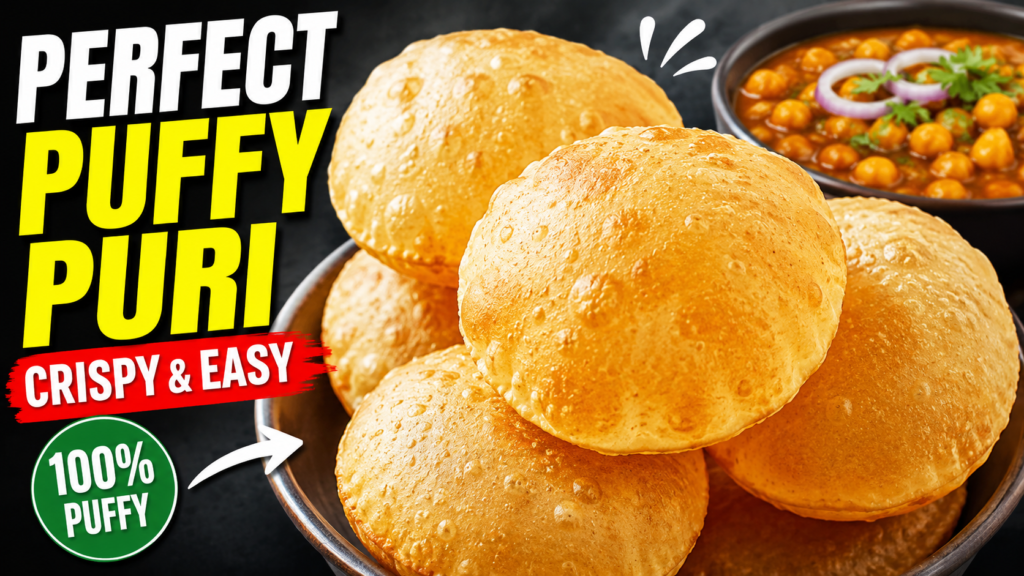
Perfect Puffy Puri Recipe: How to Make Crispy Indian Fried Bread at Home
By Kaushik Brahmakshatriya
Published on 02 July 2026.
puri recipe
Puri is one of the most loved deep-fried Indian breads, known for its light, puffy texture and golden-brown crust. Made from simple wheat flour dough, puri is a staple across Indian households, often served during festivals, special occasions, or as part of a hearty breakfast alongside aloo sabzi, chana masala, or halwa. Getting that perfect puff requires the right dough consistency, rolling technique, and oil temperature — and this guide covers exactly that.Why Puri Puffs Up
Why Puri Puffs Up
The magic behind a puffed puri lies in trapped steam. When the rolled dough hits hot oil, the outer layer cooks instantly, sealing in moisture. The trapped steam expands rapidly, causing the puri to balloon up. A dough that’s too soft, oil that’s not hot enough, or uneven rolling can all prevent this puffing action.
Ingredients
| Ingredient | Quantity |
| Whole wheat flour (atta) | 2 cups |
| Water (lukewarm) | ½ cup (approx.) |
| Salt | ½ tsp |
| Oil (for dough) | 1 tbsp |
| Oil (for deep frying) | As needed |
| Semolina (optional, for extra crispness) | 1 tsp |
Step-by-Step Method
| Step | Instructions |
| 1 | Mix flour, salt, and 1 tbsp oil in a bowl. Rub together until crumbly. |
| 2 | Gradually add water and knead into a stiff, smooth dough (firmer than roti dough). |
| 3 | Cover and rest the dough for 15–20 minutes. |
| 4 | Divide into small equal balls and roll each into a small, thick round (not too thin). |
| 5 | Heat oil in a deep pan until it’s medium-hot (test with a small dough piece — it should rise immediately). |
| 6 | Gently slide the rolled puri into hot oil, press lightly with a slotted spoon to help it puff. |
| 7 | Flip once golden and puffed, fry both sides evenly, then drain on paper towels. |
Tips for Perfectly Puffed Puri
| Tip | Why It Matters |
| Keep dough stiff, not soft | Soft dough absorbs oil and doesn’t puff well |
| Roll evenly, medium thickness | Uneven rolling causes uneven puffing |
| Oil must be hot but not smoking | Too cold = soggy puri; too hot = burns fast without puffing |
| Fry immediately after rolling | Resting rolled puris makes them dry and less puffy |
| Don’t overcrowd the pan | Reduces oil temperature, affecting puff quality |
Serving Suggestions
Puri pairs beautifully with spicy aloo sabzi, chole, kurma, or a sweet suji halwa for a festive breakfast combo. It’s also popular in North Indian thalis and is commonly prepared for festivals like Diwali, Navratri, and family celebrations.
Frequently Asked Questions (FAQ)
Q1: Why is my puri not puffing up?
This usually happens due to soft dough, oil that isn’t hot enough, or rolling the puri too thin or unevenly. Ensure the dough is stiff and the oil is properly heated before frying.
Q2: Can I make puri dough in advance?
It’s best to use the dough fresh within a couple of hours. Resting it too long can make it harder to roll and reduce puffing.
Q3: What’s the difference between puri and bhatura?
Puri is made from unleavened wheat dough with no fermentation, while bhatura uses refined flour with yogurt or yeast for a fermented, softer texture.
Q4: Can puri be made healthier?
Yes, using whole wheat flour instead of refined flour, and frying at the correct temperature to minimize oil absorption, makes puri relatively healthier.
Q5: How do I store leftover puri?
Cooled puris can be stored in an airtight container for up to a day at room temperature, though they taste best fresh and hot.
