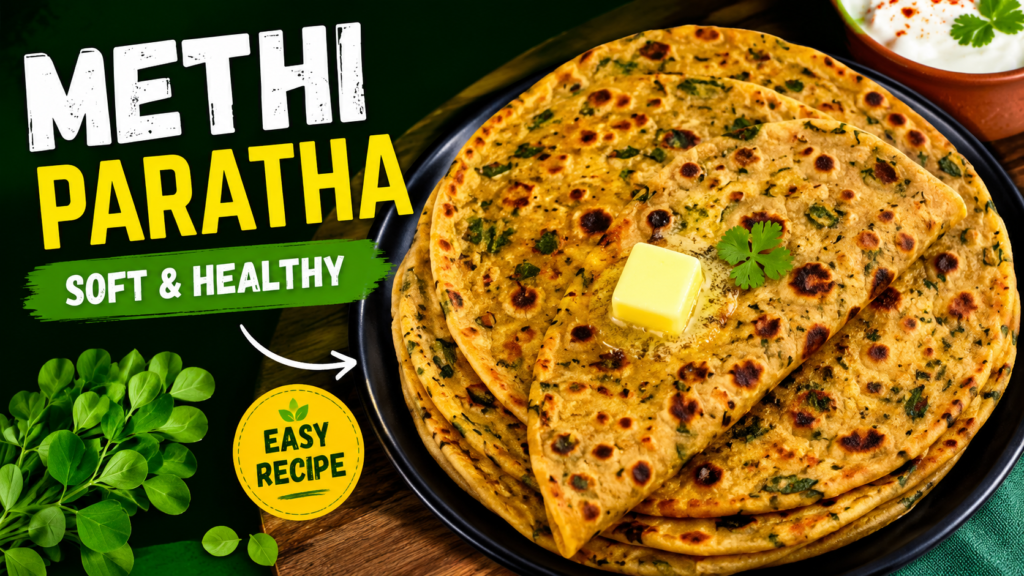
Methi Paratha Recipe | Soft & Healthy Fenugreek Flatbread
By Kaushik Brahmakshatriya
Published On 26 May 2026.
Methi Paratha Recipe
Methi Paratha is one of those timeless Indian breakfast staples that never goes out of style. Made with fresh fenugreek leaves (methi) kneaded directly into whole wheat dough, this flatbread is slightly bitter, wonderfully aromatic, and deeply satisfying. Whether you enjoy it hot off the tawa with a dollop of butter, a bowl of curd, or a tangy mango pickle, Methi Paratha brings warmth and wholesomeness to your plate every single morning.
What makes this recipe stand out is its simplicity. You need no fancy ingredients — just fresh methi, whole wheat flour, and a handful of everyday spices sitting in your kitchen right now. In less than 30 minutes, you can have a stack of perfectly golden, soft parathas ready to serve. It is also one of the most nutritious Indian flatbreads, making it a favourite among health-conscious home cooks across India.
Why You Will Love This Methi Paratha
Fresh fenugreek leaves bring a distinctive mild bitterness that balances beautifully with the earthiness of whole wheat flour. The addition of carom seeds (ajwain), green chilli, and a touch of turmeric gives each paratha its characteristic golden colour and deep, layered flavour. Unlike plain rotis, Methi Paratha is filling enough to keep you energised through a long morning without feeling heavy.
Ingredients You Will Need
Methi Paratha Ingredient List
| Ingredient | Quantity | Notes |
| Whole wheat flour (atta) | 2 cups | Sieved |
| Fresh methi (fenugreek) leaves | 1 cup (packed) | Washed, finely chopped |
| Green chilli | 1–2 | Finely chopped (adjust to taste) |
| Ginger | 1 tsp | Freshly grated |
| Carom seeds (ajwain) | ½ tsp | Enhances digestion |
| Turmeric powder | ¼ tsp | For colour and health |
| Red chilli powder | ½ tsp | Optional |
| Salt | To taste | — |
| Oil or ghee | 2 tsp + for cooking | For dough and roasting |
| Water | As required | For kneading the dough |
Step-by-Step Method
Step 1 — Prep the Methi Leaves
Wash the fresh fenugreek leaves thoroughly under running water. Shake off excess moisture and chop them finely. Sprinkle a pinch of salt, mix, and let them sit for five minutes. Gently squeeze out any extra water — this removes excess bitterness and prevents your dough from becoming sticky.
Step 2 — Make the Dough
In a large mixing bowl, add whole wheat flour, chopped methi leaves, green chilli, grated ginger, ajwain, turmeric, red chilli powder, salt, and two teaspoons of oil. Mix everything together with your hands. Gradually add water, a little at a time, and knead into a smooth, soft, pliable dough. Cover with a damp cloth and allow it to rest for 15–20 minutes.
Step 3 — Roll the Parathas
Divide the dough into equal-sized balls (roughly the size of a golf ball). Dust a clean surface lightly with flour and roll each ball into a round disc approximately 6–7 inches in diameter. Keep the thickness even so it cooks uniformly.
Step 4 — Cook on Tawa
Heat a flat iron tawa or griddle over medium-high flame. Place the rolled paratha on the hot tawa. Cook for about 60–90 seconds until small bubbles appear on the surface. Flip it and apply a teaspoon of ghee or oil. Press gently with a spatula and cook the other side until golden brown spots appear. Flip once more, apply ghee on this side, and roast for another 30 seconds. The paratha should have beautiful golden-brown spots on both sides.
Step 5 — Serve Hot
Remove from the tawa and serve immediately. Repeat with remaining dough balls. Stack the cooked parathas in a roti basket lined with a cloth to keep them soft.
Serving Suggestions
Methi Paratha tastes best when served hot and fresh. Classic pairings include plain curd, boondi raita, homemade butter, mango pickle (aam ka achar), or a simple green chutney. It also pairs wonderfully with a cup of masala chai on a cool morning.
Nutrition Information (Per Paratha, Approximate)
Nutritional Profile of Methi Paratha
| Nutrient | Amount Per Paratha |
| Calories | ~150–170 kcal |
| Carbohydrates | 24–26 g |
| Protein | 4–5 g |
| Dietary Fibre | 3–4 g |
| Fat | 4–6 g |
| Iron | ~10% of Daily Value |
| Calcium | ~5% of Daily Value |
Fresh methi leaves are rich in iron, folate, Vitamin C, and dietary fibre. Regular consumption supports blood sugar management, aids digestion, and helps maintain healthy cholesterol levels.
Pro Tips for Perfect Methi Paratha
Common Mistakes & Expert Fixes
| Mistake | Why It Happens | Fix |
| Paratha turns too bitter | Excess moisture in methi leaves | Salt and squeeze methi before adding |
| Dough becomes sticky | Too much water or wet methi | Add dry flour gradually while kneading |
| Paratha turns hard | Over-kneading or thick rolling | Rest the dough; roll evenly and thin |
| Paratha cooks unevenly | Tawa not hot enough | Always preheat tawa on medium-high |
| Lacks flavour | Skipping ajwain or ginger | Always include both for authentic taste |
Frequently Asked Questions (FAQ)
Q1. Can I use dried methi (kasuri methi) instead of fresh leaves?
Yes, you can substitute fresh methi with kasuri methi. Use 2–3 tablespoons of dried kasuri methi in place of 1 cup fresh leaves. However, fresh methi gives a much more vibrant flavour and aroma, so use it whenever available.
Q2. How do I reduce the bitterness of methi leaves in the paratha?
Sprinkle salt over the chopped fresh methi leaves and let them rest for 5–8 minutes. The salt draws out excess moisture along with some of the bitter compounds. Gently squeeze the leaves before adding to the flour. This simple step significantly reduces bitterness without losing nutrition.
Q3. Can Methi Paratha be made without oil for a healthier version?
You can make the dough without oil, though a small amount improves the texture and keeps parathas soft for longer. For the cooking step, you can dry-roast on a non-stick tawa with minimal or no oil. However, a light brush of ghee greatly enhances both flavour and softness.
Q4. How long can I store Methi Paratha dough or cooked parathas?
The kneaded dough can be refrigerated in an airtight container for up to 24 hours. Cooked parathas can be stored wrapped in foil or in an airtight container at room temperature for 4–5 hours, or refrigerated for up to 2 days. Reheat on a hot tawa before serving.
Q5. Is Methi Paratha good for diabetics?
Methi (fenugreek) is widely recognized for its blood sugar-regulating properties. When made with whole wheat flour, Methi Paratha has a moderate glycaemic index. Diabetics can enjoy it in moderation, ideally paired with curd rather than butter or pickle, and as part of a balanced meal.
