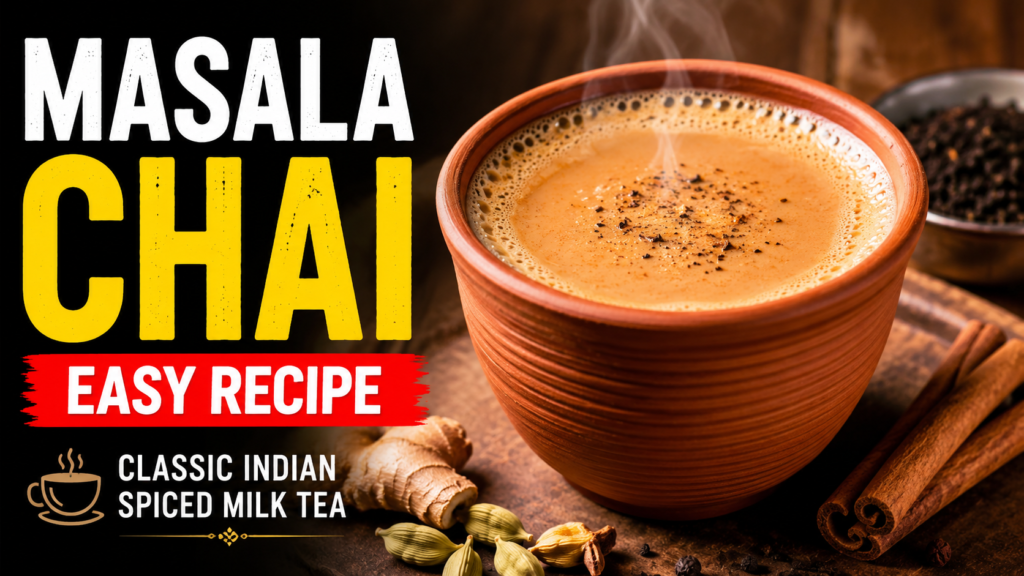
Masala Chai Recipe: How to Make Classic Indian Spiced Milk Tea at Home
By Kaushik Brahmakshatriya
Published On 24 June 2026.
Masala Chai Recipe
There is something deeply comforting about a warm cup of Masala Chai. From the busy streets of Mumbai to quiet kitchen corners in Ahmedabad, this spiced milk tea is woven into the everyday fabric of Indian life. Unlike plain tea, Masala Chai brings together a powerful blend of whole spices, fresh ginger, and strong black tea leaves simmered slowly in milk. The result is a rich, aromatic, and slightly sweet cup that warms both body and soul.
Whether you are making it for the first time or trying to recreate the exact flavour of the chai you grew up with, this recipe will guide you through every step.
What Is Masala Chai?
Masala Chai translates directly to “spiced tea” in Hindi — masala means spice mix and chai means tea. It is traditionally brewed by boiling tea leaves with whole spices like cardamom, cloves, cinnamon, black pepper, and ginger in a mixture of water and full-fat milk. The drink is then sweetened with sugar and served hot. Every Indian household has its own unique variation, but the soul of the recipe remains the same.
Ingredients You Need
| Ingredient | Quantity (2 Cups) |
| Water | 1 cup |
| Full-fat milk | 1 cup |
| Black tea leaves (CTC preferred) | 2 teaspoons |
| Sugar | 2 teaspoons (adjust to taste) |
| Fresh ginger (grated) | 1 inch piece |
| Green cardamom pods (crushed) | 3–4 |
| Cinnamon stick | 1 small piece |
| Cloves | 2–3 |
| Black pepper (crushed) | 3–4 corns |
Step-by-Step Method
Step 1 — Boil Water with Spices:
Add water to a small saucepan over medium flame. Add crushed cardamom, cinnamon, cloves, black pepper, and freshly grated ginger. Let it come to a rolling boil and simmer for 2–3 minutes so the spices release their oils fully into the water.
Step 2 — Add Tea Leaves:
Once the water turns dark and fragrant, add the CTC black tea leaves. Stir once and let it boil for another 1–2 minutes. This step determines the strength of your chai — boil longer for a bolder brew.
Step 3 — Pour in the Milk:
Add full-fat milk to the saucepan and increase the flame slightly. Stir continuously and bring the mixture to a full boil. Once it rises, lower the flame and simmer for 2 minutes. This slow simmer is what gives Masala Chai its signature creamy texture.
Step 4 — Sweeten and Strain:
Add sugar directly to the pan, stir well, and taste. Strain the chai through a fine mesh strainer into cups and serve immediately.
Spice Comparison: Whole vs. Pre-Made Chai Masala
| Feature | Whole Spices | Ready-Made Chai Masala Powder |
| Flavour Intensity | Strong and fresh | Mild and consistent |
| Preparation Time | Slightly longer | Quick and easy |
| Aroma | Deeply fragrant | Moderate |
| Shelf Life | Months (stored whole) | 6–12 months |
| Best For | Home brewing, festive occasions | Daily quick chai |
Pro Tips for the Perfect Cup
Using CTC (Crush, Tear, Curl) tea leaves rather than loose leaf tea gives Masala Chai its characteristic strong colour and bold flavour. Always grate fresh ginger rather than using ginger powder — the difference in taste is significant. If you prefer a dairy-free option, oat milk or coconut milk works beautifully as a substitute.
Frequently Asked Questions (FAQ)
Q1. Which tea leaves are best for Masala Chai?
CTC Assam black tea leaves are the most popular choice for Masala Chai because they brew quickly, produce a strong dark colour, and hold up well against the intensity of whole spices. Brands like Wagh Bakri, Tata Tea Gold, and Brooke Bond Red Label are household favourites across India.
Q2. Can I make Masala Chai without milk?
Yes, you can make a dairy-free version by replacing milk with oat milk, almond milk, or coconut milk. The spices will still deliver their full aroma and warmth. However, traditional Masala Chai is always made with full-fat dairy milk for the creamiest result.
Q3. How much sugar should I add to Masala Chai?
The ideal sweetness is entirely personal. Most Indians add 1 to 2 teaspoons of sugar per cup. You can also use jaggery (gur) as a natural sweetener, which adds a subtle earthy flavour that pairs wonderfully with cinnamon and cardamom.
Q4. What makes Masala Chai healthy?
The spices in Masala Chai offer genuine health benefits. Ginger aids digestion and reduces nausea. Cardamom supports respiratory health. Cinnamon helps regulate blood sugar levels. Black pepper improves nutrient absorption. When consumed in moderation, Masala Chai is far more than just a comforting drink — it is a functional wellness beverage rooted in Ayurvedic tradition.
Q5. Why does my Masala Chai taste bitter?
Bitterness usually comes from over-boiling the tea leaves. Once you add tea leaves to the boiling spiced water, limit the brew time to 1–2 minutes before adding milk. Over-brewing releases tannins from the leaves, which create an unpleasant bitter taste.
