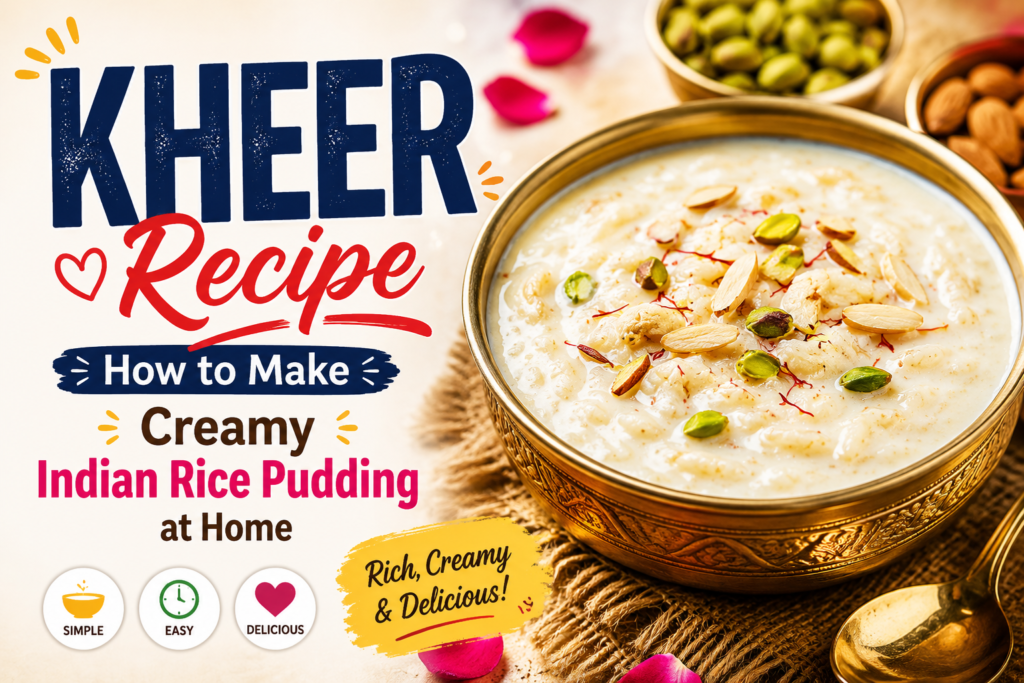
Kheer Recipe – How to Make Creamy Indian Rice Pudding at Home
By Kaushik Brahmakshatriya
Published On 09 May 2026.
Kheer Recipe
If there is one dessert that has lived in Indian kitchens for centuries without ever going out of style, it is Kheer. This silky, aromatic rice pudding brings together the simplest ingredients — rice, milk, and sugar — and transforms them into something truly comforting and celebration-worthy. Whether you are preparing it for Diwali, a family gathering, or just a quiet evening at home, a bowl of warm kheer never disappoints.
In this post, you will learn exactly how to make authentic kheer recipe from scratch, with tips to get that perfectly creamy texture every single time.
What Is Kheer?
Kheer is a traditional Indian dessert made by slowly simmering basmati rice in full-fat milk until the mixture reduces, thickens, and becomes rich and creamy. It is then sweetened with sugar and flavored with green cardamom, saffron, and a hint of rose water. Garnished with chopped almonds, pistachios, and cashews, kheer is as beautiful to look at as it is delicious to eat.
Known as Chawal Ki Kheer in Hindi, this dessert holds deep cultural significance across India. It is offered as prasad in temples, served at weddings, and cooked lovingly during every major Indian festival.
Ingredients for Kheer Recipe
(Serves 4)
| Ingredient | Quantity |
| Basmati rice | ¼ cup |
| Full-fat milk | 1 litre (4 cups) |
| Sugar | 4–5 tablespoons |
| Pistachios (chopped) | 10–12 |
| Green cardamom pods | 3–4 (crushed) |
| Saffron strands | A small pinch |
| Ghee | 1 teaspoon |
| Almonds (sliced) | 10–12 |
| Cashews (halved) | 8–10 |
| Rose water | ½ teaspoon (optional) |
| Raisins | 1 tablespoon (optional) |
How to Make Kheer – Step-by-Step Method
Step 1 – Wash and Soak the Rice
Rinse the basmati rice under cold running water two to three times until the water runs clear. Soak it for 20 to 30 minutes, then drain fully and set aside. Soaking helps the rice cook evenly inside the milk.
Step 2 – Toast the Rice in Ghee
Heat one teaspoon of ghee in a heavy-bottomed pan over medium heat. Add the drained rice and crushed cardamom pods. Stir gently for about one to two minutes until the rice smells nutty and fragrant. This small step adds a beautiful depth of flavor to your kheer.
Step 3 – Add Milk and Bring to a Boil
Pour in the full-fat milk and raise the heat to medium-high. Bring the milk to a gentle boil, stirring occasionally. Once it starts boiling, reduce the heat to medium-low so the milk simmers slowly without scorching at the bottom.
Step 4 – Simmer Until Thick and Creamy
Cook the rice in the milk, stirring every three to four minutes, for around 25 to 35 minutes. The milk will slowly reduce and thicken, and the rice will become very soft and slightly mushy. This slow cooking process is what gives kheer its signature creamy body. Do not rush this step.
Step 5 – Add Sugar and Saffron
Once the milk has reduced to roughly half its original volume and the rice is fully cooked, stir in sugar. Add a pinch of saffron soaked in two teaspoons of warm milk for a beautiful golden color and floral aroma. Cook for another 8 to 10 minutes, stirring continuously, until the sugar dissolves completely and the kheer reaches your preferred consistency.
Step 6 – Finish and Garnish
Turn off the heat. Add rose water if using, and stir well. Pour the kheer into serving bowls and garnish generously with sliced almonds, chopped pistachios, cashews, and raisins. Serve warm, or refrigerate for two hours and enjoy it chilled.
Pro Tips for the Best Kheer
* Always use a heavy-bottomed steel pan to prevent the milk from burning at the base.
* Use full-fat whole milk for the richest, creamiest texture.
* Keep the heat on medium-low throughout cooking — patience is the secret.
* Kheer thickens further as it cools, so remove it from heat while it still looks slightly loose.
* For a quicker version, use an Instant Pot on porridge mode for 20 minutes.
Kheer Variations You Can Try
* Coconut Kheer – Replace half the milk with coconut milk and top with toasted coconut flakes for a South Indian twist.
* Rose Kheer – Add a spoonful of rose syrup at the end for a gorgeous pink color and floral fragrance.
* Sabudana Kheer – Swap rice with soaked sabudana (sago pearls) for a Navratri-friendly variation.
* Jaggery Kheer – Replace white sugar with jaggery for a richer, caramel-toned dessert similar to South Indian payasam.
How to Store Kheer
Kheer stays fresh in the refrigerator for 3 to 4 days when stored in an airtight container. It will thicken after chilling — simply stir in a splash of milk before serving to bring it back to the right consistency.
Frequently Asked Questions (FAQ)
Q1. Can I make kheer without basmati rice?Yes. While basmati rice gives the best flavor and creaminess, you can use regular short-grain rice or jasmine rice as substitutes. The texture will vary slightly but the result is still delicious.
Q2. Can kheer be made vegan?
Absolutely. Replace full-fat dairy milk with coconut milk or almond milk, and skip the ghee or use vegan butter. The kheer will be slightly less rich but still very tasty.
Q3. How do I make kheer thicker?
If your kheer is too thin, simply continue simmering on low heat for an additional 10 minutes. Alternatively, use a slightly higher ratio of rice — ⅓ cup instead of ¼ cup per litre of milk.
Q4. Can kheer be served cold?
Yes! Kheer tastes wonderful both warm and chilled. During summer, refrigerated kheer is especially refreshing and makes a great make-ahead dessert for parties.
Q5. Is kheer the same as rice pudding?
Kheer and rice pudding share the same base of rice and milk, but kheer is distinctly Indian — flavored with cardamom, saffron, and rose water, and garnished with nuts. The taste and aroma are far more complex than plain Western rice pudding.
Kheer is one of those timeless recipes that connects generations. Once you master this basic version, you can experiment endlessly with flavors, garnishes, and variations. Try it this weekend and bring a little sweetness to your table.
