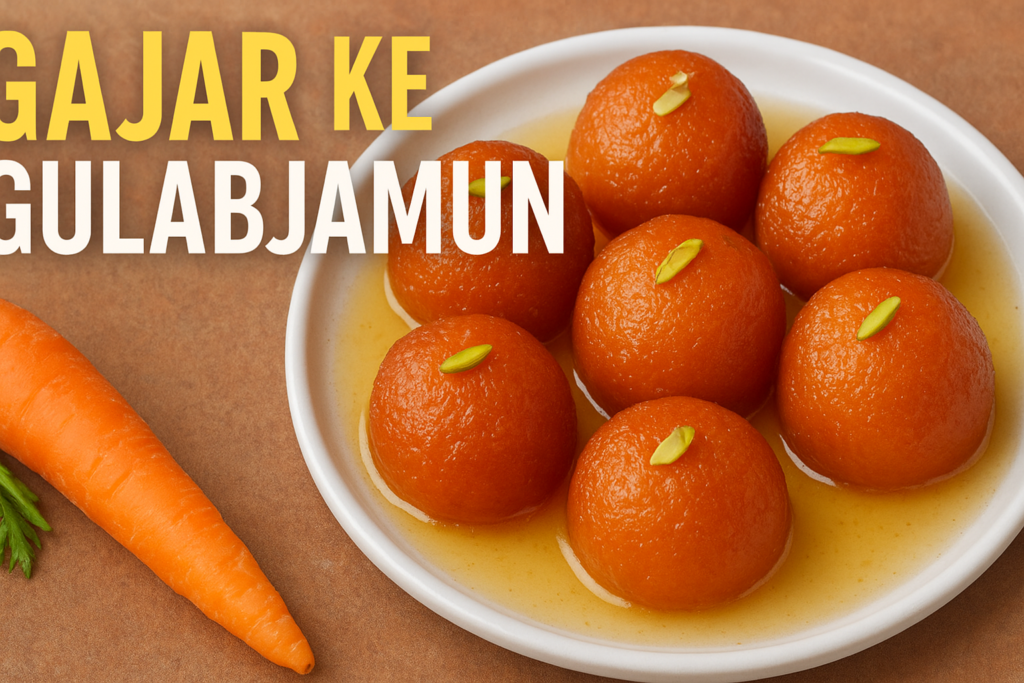
Gajar Ke Gulab Jamun Recipe
09, January 2026. By -Kaushik
Making Gajar Ke Gulab Jamun (Carrot Jamuns) is a wonderful twist on the traditional dessert. It combines the rich, earthy sweetness of carrots with the soft, melt-in-the-mouth texture of classic Gulab Jamuns.
Here is a detailed, step-by-step guide to making about 20–25 delicious jamuns.
Gajar Ke Gulab Jamun Recipe
Ingredients You’ll Need
For the Jamun Dough:
Carrots: 500g (tender, red carrots work best)
Mawa (Khoya): 200g (fresh and crumbled)
Paneer: 50g (grated finely)
All-purpose flour (Maida): 3–4 tbsp (as a binder)
Cardamom powder: ½ tsp
Ghee: 1 tbsp (for sautéing carrots) + extra for deep frying
For the Sugar Syrup (Chashni):
Sugar: 2 cups
Water: 2 cups
Cardamom pods: 3–4 (crushed)
Saffron strands: A pinch (optional)
Rose water: 1 tsp
Step-by-Step Preparation (Banane Ki Vidhi)
Step 1: Prepare the Carrots
Wash and peel the carrots. Grate them using the finest side of your grater. The finer the grate, the smoother your jamuns will be. If the carrots are very juicy, squeeze out a little excess juice so the mixture doesn’t become too runny.
Step 2: Cook the Carrot Base
Heat 1 tablespoon of ghee in a non-stick pan. Add the grated carrots and sauté on medium flame. Cook until the moisture evaporates and the carrots soften significantly. You want a dry, cooked carrot paste. Once done, let it cool completely.
Step 3: Prepare the Sugar Syrup
While the carrots cool, prepare the syrup. In a wide pot, combine sugar and water. Bring to a boil, then add crushed cardamoms and saffron. Let it simmer for about 8–10 minutes until it becomes slightly sticky (you are looking for a “half-thread” consistency). Stir in the rose water and keep the syrup warm on very low heat.
Step 4: Combine the Solids
In a large mixing bowl, take the cooled carrot mixture, crumbled mawa, and grated paneer. Use the heels of your palms to mash and rub the mawa and paneer together until they are completely smooth and free of lumps.
Step 5: Bind the Dough
Add the all-purpose flour (maida) and cardamom powder to the mixture. Knead it gently into a soft, smooth dough.
Tip: If the mixture feels too sticky, add another tablespoon of maida. If it feels too dry, add a teaspoon of milk.
Step 6: Shape the Jamuns
Divide the dough into small, equal-sized portions. Roll them between your palms to form smooth balls. Ensure there are no cracks on the surface, as cracks will cause the jamuns to break while frying.
Step 7: Heat the Ghee/Oil
Heat ghee or oil in a deep frying pan (kadai) on medium heat. To test if it’s ready, drop a tiny piece of dough; it should sit at the bottom for a second and then slowly rise to the top with bubbles.
Step 8: Deep Fry the Jamuns
Lower the heat to low-medium. Gently slide in 4–5 jamuns at a time. Do not crowd the pan. Use a slotted spoon to gently swirl the oil around the jamuns without touching them directly at first. This ensures they rotate and brown evenly.
Step 9: Achieving the Golden Color
Fry the jamuns until they turn an even, deep golden-brown or dark reddish-orange. This should take about 5–7 minutes. Frying on low heat is crucial so they cook all the way to the center.
Step 10: Soaking in Syrup
Remove the jamuns with a slotted spoon and drain excess oil. Immediately drop them into the warm sugar syrup. Let them soak for at least 2 to 3 hours. They will absorb the syrup, grow slightly in size, and become incredibly soft.
Pro-Tips for Success
Temperature Balance: Never drop jamuns into boiling hot syrup; they might lose their shape. The syrup should be warm, not scalding.
Mawa Quality: Use “Dhapa” or “Hariyali” mawa if available, as it makes the softest jamuns.
The Sieve Method: If you want a professional texture, you can pulse the cooked carrot mixture in a blender for 5 seconds before mixing it with the mawa.
Disclaimer :
All content on this food blog is for informational purposes only. Recipes, tips, and nutritional information are based on personal experience and research and are not a substitute for professional medical or dietary advice. Results may vary, and readers should consider allergies, health conditions, and individual needs before trying any recipe. The blog owner is not responsible for any outcomes resulting from the use of this information.
