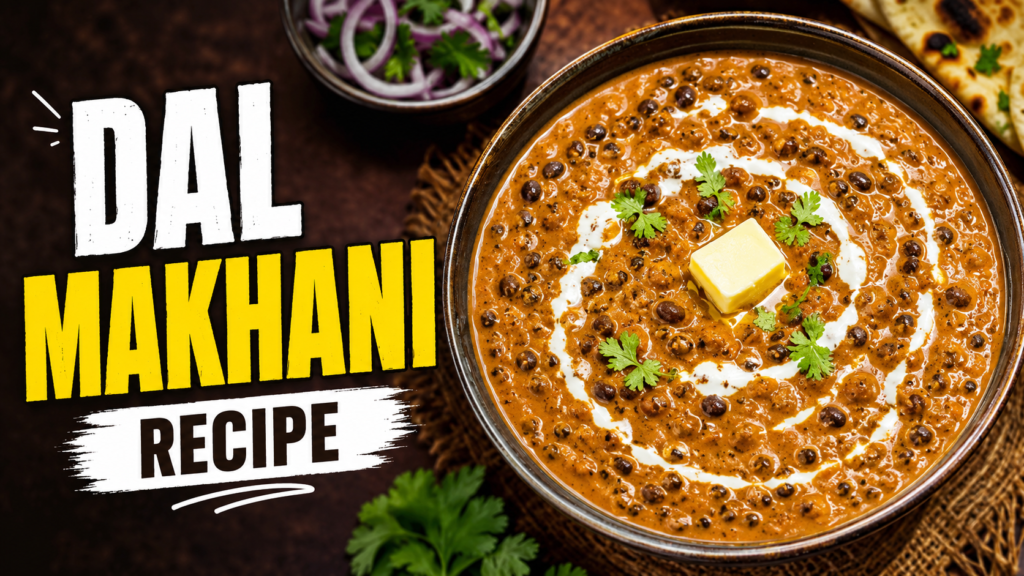
Dal Makhani Recipe: The Creamy Indian Lentil Dish You Must Try at Home
By Kaushik Brahmakshatriya
Published On 20 May 2026.
Dal Makhani Recipe
If there is one dish that defines the richness of North Indian cuisine, it is Dal Makhani. Slow-cooked whole black lentils simmered in a buttery tomato gravy — this dish has earned a permanent spot on restaurant menus and home dinner tables alike. Whether you are cooking for a family gathering or a quiet weeknight meal, Dal Makhani never fails to impress.
In this post, we share a complete, authentic Dal Makhani recipe with all the tips you need to get that deep, restaurant-style flavour right in your own kitchen.
What Is Dal Makhani?
Dal Makhani originates from the Punjab region of India and Pakistan. The word makhani literally means “buttery” in Hindi, which perfectly describes this dish. It is made using whole black lentils (urad dal) and kidney beans (rajma), slow-cooked with butter, cream, tomatoes, and aromatic spices.
Traditionally, this dal was cooked overnight in clay pots over a wood fire — a method that gave it an incomparable smoky depth. Today, we recreate that magic on a stovetop or in a pressure cooker with equally delicious results.
Ingredients Table
| Category | Ingredient | Quantity |
| Lentils | Whole black urad dal | 1 cup |
| Lentils | Red kidney beans (rajma) | ¼ cup |
| Fats | Butter (unsalted) | 3 tbsp |
| Fats | Fresh cream | ¼ cup |
| Base | Onion (finely chopped) | 1 large |
| Base | Tomatoes (pureed) | 2 medium |
| Base | Garlic (minced) | 5–6 cloves |
| Base | Ginger (grated) | 1-inch piece |
| Spices | Red chilli powder | 1 tsp |
| Spices | Coriander powder | 1 tsp |
| Spices | Garam masala | ½ tsp |
| Spices | Cumin seeds | 1 tsp |
| Others | Salt | To taste |
| Others | Water | 4–5 cups |
Step-by-Step Cooking Method
Step 1 — Soaking the Lentils
Wash the urad dal and rajma thoroughly. Soak them together in water for 8 hours or overnight. Proper soaking ensures even cooking and a creamier texture.
Step 2 — Pressure Cooking
Drain the soaked lentils. Add them to a pressure cooker with 4 cups of fresh water and a pinch of salt. Cook on medium heat for 6–7 whistles until the dal is completely soft. The rajma should be tender enough to mash between your fingers.
Step 3 — Preparing the Masala Base
Heat butter in a heavy-bottomed pan over medium flame. Add cumin seeds and let them splutter. Add chopped onions and sauté until golden brown — this step is critical for building a deep flavour base. Add minced garlic and grated ginger, cook for 2 minutes. Now add tomato puree along with red chilli powder and coriander powder. Cook the masala on low heat for 10–12 minutes, stirring frequently, until the butter begins to separate from the mixture.
Step 4 — Combining Dal and Masala
Add the cooked lentils to the masala. Mix gently and pour in 1 cup of water to adjust consistency. Simmer on very low heat for 30–40 minutes, stirring occasionally. The longer it simmers, the richer the flavour becomes.
Step 5 — Finishing Touches
Stir in fresh cream and garam masala. Simmer for another 5 minutes. Finish with a generous knob of butter on top before serving.
Nutritional Information (Per Serving)
| Nutrient | Amount Per Serving |
| Calories | ~320 kcal |
| Protein | 13 g |
| Carbohydrates | 38 g |
| Fat | 12 g |
| Fibre | 9 g |
| Sodium | 480 mg |
Values are approximate and may vary based on quantity of butter and cream used.
Pro Tips for the Best Dal Makhani
* Simmer low and slow — At least 30–40 minutes of slow cooking on a low flame makes all the difference in texture and taste.
* Do not skip butter — Butter is not just flavouring here; it creates the signature makhani texture.
* Mash a portion of dal — Lightly mashing a quarter of the cooked lentils creates natural creaminess without adding extra cream.
* Kasuri methi boost — Add a pinch of dried fenugreek leaves (kasuri methi) in the last 5 minutes for an authentic dhaba-style aroma.
Serving Suggestions
Dal Makhani pairs beautifully with butter naan, tandoori roti, steamed basmati rice, or jeera rice. Garnish with a swirl of cream, a small pat of butter, and fresh coriander leaves for a restaurant-style presentation.
Frequently Asked Questions (FAQ)
Q1. Can I make Dal Makhani without cream?Yes. You can substitute fresh cream with cashew cream or coconut cream for a dairy-light version. However, traditional Dal Makhani does use cream for its signature richness.
Q2. How long does Dal Makhani stay fresh?Stored in an airtight container in the refrigerator, Dal Makhani stays fresh for up to 3–4 days. It actually tastes better the next day as the flavours deepen overnight.
Q3. Can I make it in an Instant Pot?
Absolutely. Cook soaked lentils on high pressure for 25 minutes, then follow the same masala process and use the sauté function for slow simmering.
Q4. Is Dal Makhani healthy?
Yes — it is high in plant-based protein and dietary fibre. Moderate the amount of butter and cream to make it lighter without sacrificing too much flavour.
Q5. What is the difference between Dal Makhani and Dal Tadka?
Dal Makhani uses whole black urad dal slow-cooked with cream and butter. Dal Tadka typically uses split yellow lentils with a spiced tempering poured on top. Both are delicious but quite different in texture and taste.
