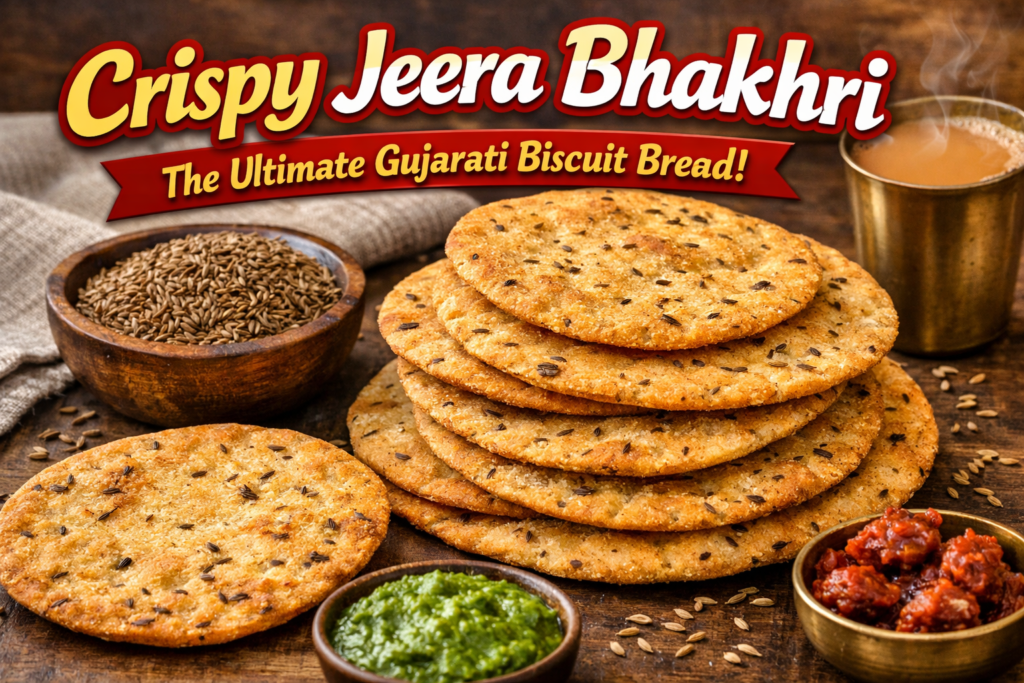
Crispy Jeera Bhakhri: The Ultimate Gujarati Biscuit Bread
By Kaushik 06, February 2026
If you have ever stepped into a Gujarati household at tea time, you’ve likely been greeted by the irresistible aroma of toasted wheat and roasted cumin. Enter the Jeera Bhakhri—a dense, crunchy, and unleavened flatbread that sits somewhere between a cracker and a biscuit.
Unlike the soft, pliable rotli, the Bhakhri is celebrated for its hard, biscuit-like texture and long shelf life. It is the quintessential travel food and the perfect companion for a steaming cup of Masala Chai or a side of spicy mango pickle. Today, I’m sharing the secret to getting that perfect “biscuit” crunch every single time.
Why This Recipe Is a Must-Try
* Minimal Ingredients: Made with pantry staples.
* Shelf-Stable: Stays fresh for up to 15 days in an airtight container.
* Healthy: Made with 100% whole wheat flour and zero preservatives.
* Versatile: Great for breakfast, snacks, or even a light dinner with curd.
Ingredients
Ingredient Quantity
Whole Wheat Flour (Coarse/Darbara) 2 Cups
Cumin Seeds (Jeera) 1.5 tsp
Ghee or Oil (Moyan) 3-4 tbsp
Salt To taste
Turmeric Powder (Optional) ¼ tsp
Lukewarm Water As needed (approx. ½ cup)
How to Make It: Step by Step
1.The Secret to Perfect Texture: Moyan
In a large mixing bowl, combine the whole wheat flour, salt, turmeric, and cumin seeds. Add the ghee (or oil). This is the most crucial step. Rub the ghee into the flour using your fingertips until the mixture resembles coarse breadcrumbs.
Pro Tip: Take a fistful of the flour and press it. If it holds its shape, your “Moyan” (shortening) is perfect. This ensures the Bhakhri turns out crispy, not hard.
2.Preparing the Dough
Gradually add lukewarm water, a tablespoon at a time, to form a dough. The dough for Bhakhri must be very stiff—much firmer than regular paratha or roti dough. If the dough is soft, the Bhakhri will be chewy instead of crunchy. Cover and let it rest for 15 minutes.
3.Shaping the Dough
Divide the dough into equal-sized balls (roughly the size of a golf ball). Roll them out into circles about 4-5 inches in diameter. Bhakhris are traditionally rolled thick (about 3-4 mm).
Use a knife or a fork to prick the surface of the rolled dough. This prevents the Bhakhri from puffing up like a puri.
4.The Art of Slow Cooking
Heat a heavy-bottomed griddle (tawa) on low-medium heat. Place the Bhakhri on the tawa. Once tiny bubbles appear, flip it. Apply a few drops of ghee on both sides.
Using a folded kitchen cloth or a wooden Bhakhri press, apply firm pressure while rotating the Bhakhri. Cook until golden brown spots appear and the edges become crisp. This process should take about 3-5 minutes per Bhakhri.
Expert Advice for Success
* The Flour: If you don’t have coarse wheat flour, add 2 tablespoons of semolina (suji) to regular flour for extra crunch.
* Temperature Control: Never cook Bhakhri on high heat. It will brown on the outside but remain raw and soft on the inside. Low and slow is the golden rule.
* Storage: Let them cool completely on a wire rack before stacking them. This prevents steam from making them soggy.
Serving Suggestions
Serve your Jeera Bhakhri warm with a dollop of fresh white butter (Makhan), a side of spicy Athana (pickle), or simply dip it into your morning tea. It’s a nostalgic bite of Gujarat that you can now recreate in your own kitchen!
Disclaimer :
The recipes and nutritional information shared on this Blog are for informational purposes only. While I strive to provide accurate instructions, results may vary based on individual cooking skills, equipment, and ingredient quality.
