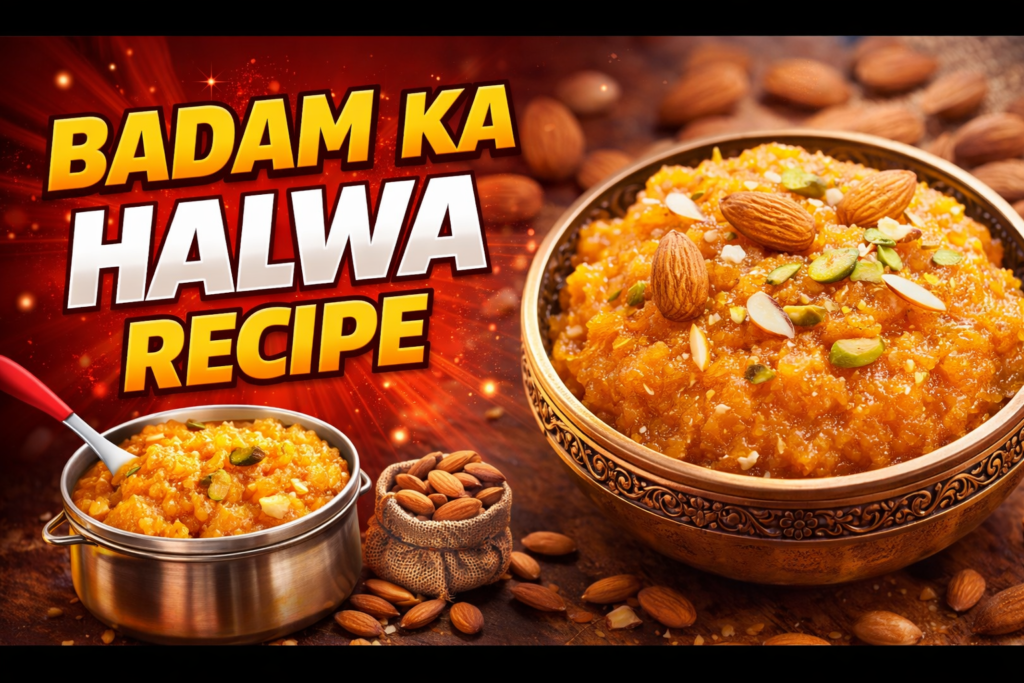
Badam ka Halwa Recipe :A Rich & Royal Almond Treat
10, January 2026. By -Kaushik
If there is one dessert that defines luxury in Indian cuisine, it is Badam Halwa. Made from soaked almonds, pure desi ghee, and fragrant saffron, this melt-in-the-mouth fudge is a staple during weddings, festivals like Diwali, and special celebrations.
In this guide, I will show you how to make the perfect, non-sticky, and aromatic Badam Halwa at home using a foolproof step-by-step method.
Ingredients You’ll Need
Before we dive into the process, ensure you have these high-quality ingredients ready:
Almonds (Badam): 1 cup (approx. 150-200g)
Milk: ½ cup (full cream preferred)
Sugar: ¾ cup (adjust to taste)
Desi Ghee: ½ cup
Saffron (Kesar): A pinch, soaked in 2 tbsp warm milk
Cardamom Powder: ½ tsp
Yellow Food Color: (Optional) A tiny pinch for a vibrant look
Step-by-Step Instructions (Banane ki Vidhi)
Step 1: Soaking the Almonds
The secret to a smooth halwa is properly soaked almonds. Soak 1 cup of almonds in hot water for about 30 to 45 minutes. Alternatively, you can soak them in room temperature water overnight.
Step 2: Peeling (Blanching)
Once soaked, the skins will loosen. Gently press each almond between your thumb and forefinger; the skin should slip right off. Discard the skins and pat the white almonds dry.
Step 3: Grinding the Paste
Transfer the peeled almonds to a blender. Add ¼ cup of milk. Pulse the blender to create a coarse paste. Do not make it too smooth—a slightly grainy (dar-dara) texture gives the halwa its signature mouthfeel.
Step 4: Preparing the Saffron
Take 2 tablespoons of warm milk and add a generous pinch of saffron strands. Let it sit for 10 minutes until the milk turns a deep golden yellow. This provides a natural aroma and color.
Step 5: Heating the Ghee
In a heavy-bottomed non-stick pan (kadai), heat 2 tablespoons of ghee over low-medium flame. Using a heavy pan is crucial to prevent the almond paste from sticking or burning.
Step 6: Sautéing the Almond Paste
Add the ground almond paste to the ghee. Cook on low heat, stirring continuously. This is the most important step. You need to cook the moisture out of the almonds until the raw smell disappears and the paste starts to turn a very light golden hue.
Step 7: Adding Milk and Saffron
Once the paste is slightly cooked, pour in the remaining milk and the prepared saffron milk. Stir well to ensure there are no lumps. The mixture will start to thicken as the almonds absorb the liquid.
Step 8: Incorporating Sugar
Add the sugar and the remaining ghee (one tablespoon at a time). As the sugar melts, the halwa will become a bit thin and glossy. Continue to stir on low-medium heat.
Step 9: Achieving the Right Consistency
Keep stirring until the halwa starts leaving the sides of the pan. The ghee will begin to separate slightly at the edges. Add the cardamom powder at this stage for a fresh burst of flavor.
Step 10: Final Touch and Serving
Once the halwa holds its shape and has a beautiful glossy sheen, turn off the heat. Do not overcook, as it thickens further as it cools. Serve it warm in small bowls, garnished with a few slivers of pistachios or extra saffron strands.
Pro-Tips for the Best Badam Halwa
Patience is Key: Never cook Badam Halwa on high heat. High heat will burn the almond fats and ruin the delicate flavor.
Ghee Quality: Always use pure Desi Ghee. The flavor of this dish relies heavily on the quality of the fat used.
Storage: You can store this halwa in the refrigerator for up to 10 days. Simply reheat it with a splash of milk before serving.
Note: This recipe is naturally gluten-free! If you want a vegan version, replace the milk with water or almond milk and use vegan butter or coconut oil instead of ghee.
Disclaimer :
All content on this food blog is for informational purposes only. Recipes, tips, and nutritional information are based on personal experience and research and are not a substitute for professional medical or dietary advice. Results may vary, and readers should consider allergies, health conditions, and individual needs before trying any recipe. The blog owner is not responsible for any outcomes resulting from the use of this information.
