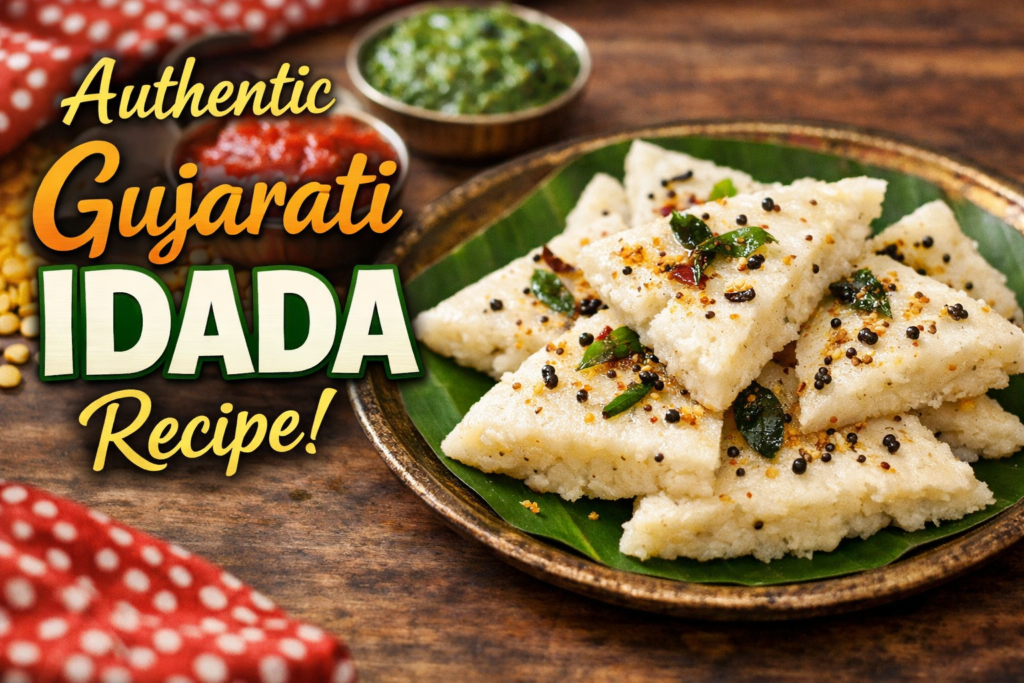
Authentic Gujarati Idada Recipe: The Soft & Peppery White Dhokla
22, January 2026. By -Kaushik
If you are looking for a healthy, steamed, and protein-packed snack from the heart of Gujarat, Idada (also known as White Dhokla) is the perfect choice. Unlike the yellow Khaman Dhokla, Idada is made from a fermented batter of rice and urad dal, seasoned heavily with black pepper. It is light, airy, and naturally gluten-free!
This recipe will help you achieve that perfect sponge-like texture that makes Gujarati farsan famous worldwide.
Ingredients (Samgri)
To make the perfect Idada, you will need the following ingredients:
Rice: 2 cups (Sona Masuri or any short-grain rice)
Urad Dal (Split Black Gram): 1 cup
Sour Yogurt/Curd: ½ cup (helps in fermentation)
Ginger-Green Chilli Paste: 2 tbsp
Oil: 2 tbsp (for the batter and greasing)
Fruit Salt (Eno): 1 tsp
Black Pepper Powder: 2 tbsp (coarsely crushed)
Salt: To taste
Water: As required for grinding and consistency
Fresh Coriander: For garnishing
Step-by-Step Instructions
Follow these 10 steps to recreate the magic of Gujarat’s street-style Idada at home:
1.Soaking the Grains: Wash the rice and urad dal separately. Soak them in plenty of water for at least 5 to 6 hours.
2.Grinding the Batter: Drain the water. Grind the rice and dal together with the sour yogurt into a slightly coarse paste. The consistency should be similar to Idli batter—thick but pourable.
3.The Fermentation Process: Transfer the batter to a large bowl. Cover it and keep it in a warm place for 8 to 10 hours or overnight. You will notice the batter has doubled in volume and smells slightly sour.
4.Seasoning: Once fermented, add the ginger-green chilli paste, salt, and 1 tablespoon of oil. Mix gently to keep the air bubbles intact.
5.Preparing the Steamer: Boil water in a steamer or a large pot. Grease the dhokla plates or thalis with a little bit of oil so the Idada doesn’t stick.
6.The Secret Ingredient: Just before steaming, add the fruit salt (Eno) to the batter. Pour a teaspoon of water over it to activate. Stir quickly in one direction until the batter becomes frothy and light.
7.Pouring: Immediately pour a thin layer of the batter into the greased plates. Do not fill them to the brim; Idada is traditionally thinner than yellow dhokla.
8.The Black Pepper Topping: Generously sprinkle the coarsely crushed black pepper all over the top of the batter. This is the signature look and flavor of authentic Idada.
9.Steaming: Place the plates in the steamer. Cover and steam on high flame for 10 to 12 minutes. To check if it’s done, insert a toothpick; it should come out clean.
10.Cooling and Cutting: Remove the plates and let them cool for 2-3 minutes. Brush a little oil on top to keep them moist. Cut into squares or diamond shapes and garnish with fresh coriander.
Pro-Tips for the Best Idada
Consistency is Key: If the batter is too watery, the Idada will be flat. If too thick, it will be hard.
Pro-Tips for the Best Idada
Consistency is Key: If the batter is too watery, the Idada will be flat. If too thick, it will be hard.
Fermentation: In colder climates, keep the batter inside an oven (turned off) with the light on to help it ferment.
Serving: Serve hot with Green Chutney or a simple drizzle of raw groundnut oil (Singtel), which is the traditional Gujarati way to enjoy it.
Note: Idada is a fantastic breakfast or tiffin box recipe because it remains soft even after it cools down!
Disclaimer :
The recipes and nutritional information shared on this Blog are for informational purposes only. While I strive to provide accurate instructions, results may vary based on individual cooking skills, equipment, and ingredient quality.
