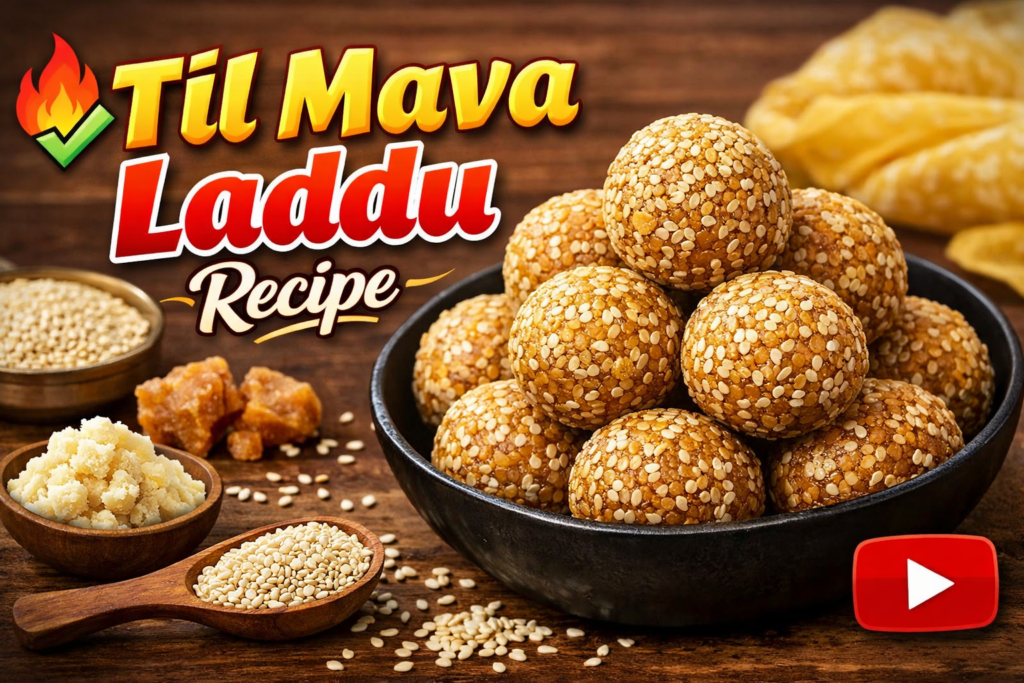
Til Mava Laddu Recipe: A Rich & Healthy Winter Treat
15, January 2026. By -Kaushik
If you are looking for a recipe that combines the earthy crunch of sesame seeds with the luxurious creaminess of evaporated milk solids, you’ve found it. These Til Mava Laddus (Sesame Khoya Truffles) are a staple in Indian households during the winter months, especially for festivals like Makar Sankranti.
Rich in calcium and healthy fats, these laddus aren’t just delicious—they are nutritional powerhouses. This recipe simplifies the process into 10 easy steps, perfect for beginners and seasoned cooks alike.
Ingredients You’ll Need
Ingredient Quantity
White Sesame Seeds (Til) 2 cups
Fresh Mava (Khoya) 1.5 cups (crumbled)
Powdered Sugar or Boora 1 cup (adjust to taste)
Green Cardamom Powder 1 tsp
Chopped Nuts (Almonds/Pistachios) 2 tbsp
Ghee (Clarified Butter) 1 tbsp (optional)
Step-by-Step Instructions
Step 1: Clean and Prep the Sesame Seeds
Start by thoroughly cleaning the white sesame seeds to remove any stones or grit. Since we will be dry roasting them, ensuring they are moisture-free is key to achieving that signature nutty aroma.
Step 2: Dry Roasting the Til
Place a heavy-bottomed pan over low-medium heat. Add the sesame seeds and roast them continuously. Watch for them to puff up slightly and change to a very light golden hue.
Pro Tip: Do not over-roast! Sesame seeds turn bitter very quickly if burnt. Once they start “popping,” they are done.
Step 3: Cool and Coarsely Grind
Transfer the roasted seeds to a wide plate and let them cool completely. Once cooled, add them to a blender. Pulse for just 2–3 seconds. You want a coarse powder, not a fine paste. Keep a handful of whole roasted seeds aside for texture.
Step 4: Roast the Mava (Khoya)
In the same pan, add the crumbled mava. Cook it on low heat, stirring constantly. The mava will first melt and then start to thicken slightly, turning a very light pink. This takes about 5–7 minutes.
Step 5: Achieve the Right Consistency
The mava is ready when it starts leaving the sides of the pan and releases a pleasant, cooked aroma. Turn off the heat immediately to prevent it from becoming hard or chewy.
Step 6: Combine the Warm Mava and Sesame
While the mava is still warm (but not scalding), add the coarsely ground sesame seeds and the whole seeds you set aside earlier. Mix well using a spatula until the ingredients are thoroughly incorporated.
Step 7: Add Aromatics and Crunch
Add the cardamom powder and the finely chopped nuts. If your mava feels a bit dry, you can add a teaspoon of ghee at this stage to help with the binding and add a beautiful shine to the laddus.
Step 8: The Sweetening Phase
Wait for the mixture to become lukewarm. This is crucial! If you add sugar to hot mava, it will melt and turn your mixture into a runny mess. Once lukewarm, fold in the powdered sugar or boora.
Step 9: Shaping the Laddus
Grease your palms with a tiny bit of ghee. Take a small portion of the mixture (about the size of a golf ball) and press it firmly between your palms, rolling it into a smooth, round sphere.
Step 10: Cooling and Storage
Let the laddus sit at room temperature for about 2 hours to firm up. Once they are set, store them in an airtight container. They stay fresh for 4–5 days at room temperature or up to 2 weeks in the refrigerator.
Tips for Success
Quality of Mava: Always use fresh, soft mava. If using store-bought frozen khoya, grate it before roasting.
Sweetener Alternatives: For a healthier version, you can replace white sugar with jaggery powder, but ensure the mixture is cool enough so the jaggery doesn’t bleed moisture.
DISCLAIMER :
All content on this food blog is for informational purposes only. Recipes, tips, and nutritional information are based on personal experience and research and are not a substitute for professional medical or dietary advice. Results may vary, and readers should consider allergies, health conditions, and individual needs before trying any recipe. The blog owner is not responsible for any outcomes resulting from the use of this information.
