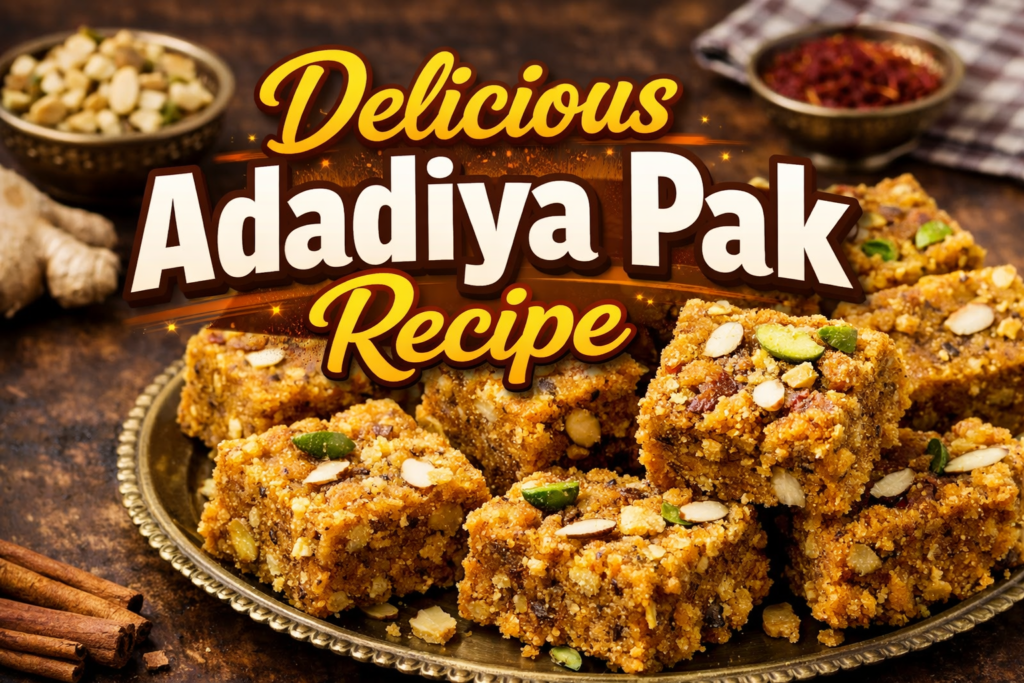
Delicious Adadiya Pak Recipe: Authentic Gujarati Winter Sweet Made Easy at Home
02, January 2026. By -Kaushik
Adadiya Pak, a beloved Gujarati winter sweet, is a rich, nourishing treat that’s perfect for chilly days. Originating from the vibrant culinary traditions of Gujarat, India, this sweet is made primarily from urad dal (black gram) flour, ghee, sugar, and a blend of warming spices like ginger, cardamom, and edible gum. It’s not just delicious but also known for its health benefits, providing warmth and energy during the cold season. Often prepared during festivals like Diwali or Uttarayan, Adadiya Pak has a crumbly, melt-in-your-mouth texture that’s irresistible. If you’re looking to try an authentic Indian sweet recipe that’s beginner-friendly, this step-by-step guide is for you. We’ll walk through the process in simple, easy-to-follow steps, ensuring you get that perfect homemade taste. This recipe serves about 10-12 people and takes around 1-2 hours to prepare, including cooking time. Let’s dive into the ingredients and method!
Ingredients for Adadiya Pak
Before we start, gather these essentials. This recipe yields approximately 1 kg of Adadiya Pak.
2 cups urad dal (black gram lentils)
1 cup ghee (clarified butter)
1 cup sugar (adjust to taste for sweetness)
1/2 cup edible gum (gond), fried and crushed
1/4 cup dry ginger powder (saunth)
1/4 cup cardamom powder (elaichi)
1/4 cup black pepper powder (optional, for extra warmth)
1/2 cup almonds, chopped
1/2 cup cashews, chopped
1/2 cup pistachios, chopped (for garnish)
1/4 cup milk (for binding, if needed)
A pinch of saffron strands (soaked in warm milk, optional for color and flavor)
These ingredients are readily available at Indian grocery stores or online. The key to authentic flavor lies in using high-quality ghee and freshly ground spices.
Step-by-Step Guide to Making Adadiya Pak
Follow these 10 straightforward steps to create your own batch of this Gujarati delight. I’ve kept it simple for home cooks, with tips to avoid common mistakes.
1.Prepare the Urad Dal Flour: Start by washing 2 cups of urad dal thoroughly under running water. Drain and spread it on a clean cloth to dry completely in the shade for about 4-5 hours or overnight. Once dry, grind the dal into a fine powder using a mixer grinder or food processor. Sieve the flour to remove any lumps for a smooth texture. This homemade flour is crucial for the authentic taste—store-bought might not yield the same results.
2.Roast the Flour: Heat 1/2 cup of ghee in a heavy-bottomed pan or kadai over medium flame. Add the urad dal flour and roast it slowly, stirring continuously to prevent burning. This step takes about 15-20 minutes until the flour turns golden brown and releases a nutty aroma. The color change is your cue—keep the flame low to avoid over-browning.
3.Fry the Edible Gum: In a separate small pan, heat 2 tablespoons of ghee. Add the edible gum pieces and fry them until they puff up like popcorn. Remove from heat, let them cool, and crush them into a coarse powder using a mortar and pestle. This adds a crunchy element and helps in binding the sweet.
4.Prepare the Spice Mix: In a bowl, combine the dry ginger powder, cardamom powder, and black pepper powder (if using). Mix well. These spices not only enhance the flavor but also provide the warming properties that make Adadiya Pak a winter favorite. Set this aside for later.
5.Make the Sugar Syrup: In another pan, add 1 cup of sugar and 1/2 cup of water. Heat on medium flame, stirring until the sugar dissolves completely. Boil the mixture to reach a one-string consistency—test by taking a drop between your fingers; it should form a single thread. This usually takes 5-7 minutes. Add the soaked saffron here if you’re using it for a golden hue.
6.Combine Flour and Syrup: Once the flour is roasted and the syrup is ready, turn off the flame under the flour pan. Slowly pour the hot sugar syrup into the roasted flour while stirring vigorously to avoid lumps. The mixture will start to thicken—keep mixing until it’s well incorporated.
7.Add Ghee and Spices: Gradually add the remaining ghee (about 1/2 cup) to the mixture, stirring continuously. This makes the pak glossy and rich. Now, fold in the prepared spice mix and crushed edible gum. The heat from the mixture will help blend everything evenly.
8.Incorporate Nuts: Add the chopped almonds, cashews, and half of the pistachios. Mix thoroughly so the nuts are distributed evenly. If the mixture feels too dry, sprinkle a little warm
9.milk to bind it better. The consistency should be like a soft dough that’s easy to shape.
Set the Pak: Grease a flat tray or thali with a bit of ghee. Transfer the hot mixture onto it and spread it evenly using a spatula or the back of a greased bowl. Press it down firmly to about 1-inch thickness. Garnish with the remaining pistachios, pressing them lightly into the surface. Let it cool at room temperature for 1-2 hours until it sets.
10.Cut and Store: Once fully cooled and firm, cut the Adadiya Pak into square or diamond shapes using a sharp knife. Store in an airtight container—it stays fresh for up to 2 weeks at room temperature or longer in the fridge. Enjoy a piece with hot tea for the ultimate winter comfort!
Tips for Perfect Adadiya Pak
*Always use a heavy-bottomed pan to prevent sticking and uneven cooking.
*If you’re new to Indian sweets, practice the sugar syrup consistency—it’s the make-or-break step.
*For a vegan version, substitute ghee with coconut oil, though it alters the traditional taste slightly.
*This sweet is calorie-dense, so portion control is key if you’re watching your intake.
*Experiment with adding khoya (milk solids) for a creamier texture in variations.
Adadiya Pak isn’t just a sweet; it’s a piece of Gujarati heritage that brings families together. Making it at home allows you to customize the spice levels and sweetness to your preference. Whether you’re preparing it for a festival or just to warm up on a cold day, this recipe will impress. If you try it, share your experience in the comments below—I’d love to hear how it turned out! For more traditional Indian recipes, check out my other posts on Gujarati snacks and sweets.
Disclaimer :
All content on this food blog is for informational purposes only. Recipes, tips, and nutritional information are based on personal experience and research and are not a substitute for professional medical or dietary advice. Results may vary, and readers should consider allergies, health conditions, and individual needs before trying any recipe. The blog owner is not responsible for any outcomes resulting from the use of this information.
