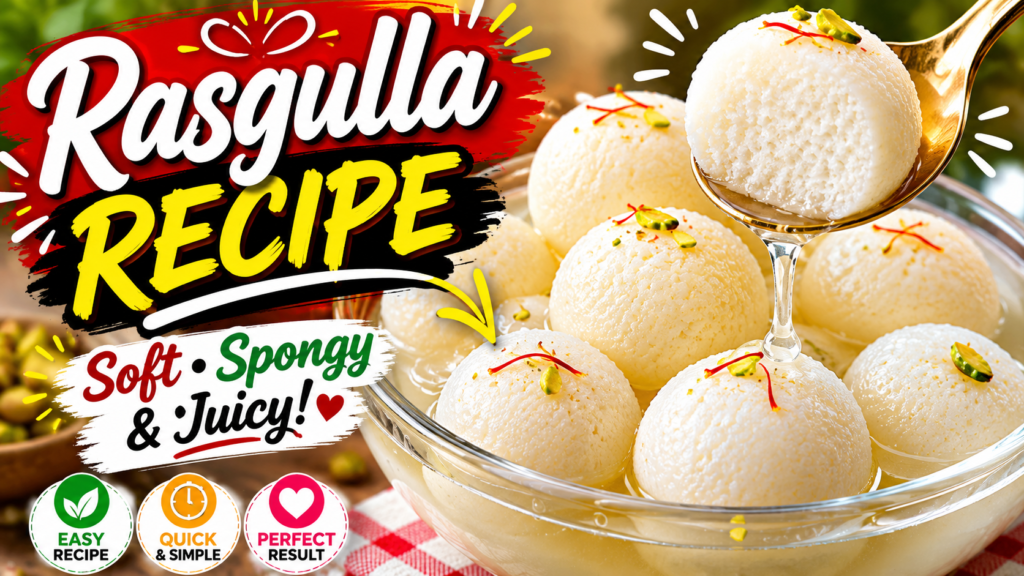
Rasgulla Recipe – How to Make Soft and Spongy Cottage Cheese Balls in Sugar Syrup at Home
By Kaushik Brahmakshatriya
Published On 25 June 2026.
Rasgulla Recipe
Rasgulla is one of India’s most beloved traditional sweets, famous across every state for its melt-in-the-mouth texture and light sugary taste. Whether it’s a wedding celebration, festival, or simply a craving for something sweet after dinner, a bowl of chilled Rasgulla never disappoints. The best part? You can make restaurant-quality Rasgulla right in your own kitchen with just a handful of everyday ingredients.
In this recipe guide, you will learn the exact technique to prepare perfectly spongy Rasgulla from scratch — no shortcuts, no compromises.
What is Rasgulla?
Rasgulla (also spelled Rasogolla) is a soft, round sweet made from chenna (fresh cottage cheese) kneaded into smooth dough balls and then cooked in a light sugar syrup until they double in size. The result is a juicy, spongy dessert that practically melts the moment it touches your tongue.
Originating from the Eastern Indian state of West Bengal, this iconic sweet has earned a GI (Geographical Indication) tag and is now enjoyed all over India and internationally.
Ingredients Required
Rasgulla Ingredients at a Glance
| Ingredient | Quantity | Purpose |
| Full-fat milk | 1 litre | Base for fresh chenna |
| Lemon juice / white vinegar | 2–3 tablespoons | To curdle the milk |
| Sugar | 1.5 cups | For sugar syrup |
| Water | 4 cups | For boiling syrup |
| Cardamom powder | ¼ teaspoon (optional) | Light flavour |
| Rose water | 1 teaspoon (optional) | Mild fragrance |
Step-by-Step Rasgulla Recipe
Step 1 – Prepare Fresh Chenna
Bring 1 litre of full-fat milk to a boil in a heavy-bottomed pan. Once it starts boiling, reduce the flame and gradually add lemon juice while stirring. The milk will begin to curdle immediately. As soon as the whey separates completely (it turns clear greenish), switch off the flame.
Step 2 – Drain and Rinse
Pour the curdled milk through a muslin cloth or clean cotton cloth placed over a strainer. Rinse the chenna under fresh cold water for 30 seconds to remove the sourness from lemon juice. Gather the cloth and squeeze out excess water, then hang it for 20–25 minutes to drain completely.
Step 3 – Knead the Chenna
Transfer the chenna to a plate or clean surface. Knead it with your palm for 8–10 minutes until it becomes completely smooth, soft, and free of any graininess. This kneading step is the secret to spongy Rasgulla — do not rush this process.
Step 4 – Shape the Balls
Divide the chenna into equal portions and roll each one into a smooth ball without any cracks on the surface. A cracked ball will break apart during boiling.
Step 5 – Prepare the Sugar Syrup
In a wide, deep pan, combine 1.5 cups of sugar with 4 cups of water. Bring to a rolling boil on medium-high heat. The pan must be wide enough to allow the balls to expand freely.
Step 6 – Cook the Rasgulla
Gently drop the chenna balls into the boiling syrup. Cover the pan with a lid and cook on medium-high heat for 15–17 minutes. Do not open the lid frequently. The balls will puff up and become spongy. Add rose water and cardamom powder in the last 2 minutes.
Step 7 – Cool and Serve
Remove from heat and let the Rasgulla cool slightly in the syrup. Transfer to a bowl and refrigerate for at least 1–2 hours before serving. Chilled Rasgulla tastes best!
Cooking Time and Serving Details
Quick Recipe Overview
| Detail | Information |
| Prep Time | 30 minutes |
| Cooking Time | 20 minutes |
| Chilling Time | 1–2 hours |
| Total Time | ~2 hours |
| Servings | 12–15 pieces |
| Difficulty Level | Intermediate |
| Best Served | Chilled |
Tips for Perfect Rasgull Every Time
- Always use full-fat milk — toned or skimmed milk will not produce the right chenna texture.
- Do not over-squeeze the chenna — it should be moist but not dry or crumbly.
- The sugar syrup must be actively boiling before you add the chenna balls.
- Use a wide pan so balls have room to expand without touching each other.
- Never reduce the flame below medium during cooking — constant heat keeps them spongy.
Nutritional Information (Approximate per piece)
Nutrition per Rasgulla Ball
| Nutrient | Approximate Value |
| Calories | 80–95 kcal |
| Carbohydrates | 16–18 g |
| Protein | 2–3 g |
| Fat | 1.5–2.5 g |
| Sugar | 14–16 g |
Frequently Asked Questions (FAQ)
Q1. Why did my Rasgulla turn hard instead of spongy?
Hard Rasgulla is usually caused by over-squeezing the chenna (making it too dry), insufficient kneading, or cooking on low heat. Always knead the chenna for a full 8–10 minutes and maintain medium-high heat throughout the cooking process.
Q2. Can I make Rasgulla without lemon juice?
Yes. You can use white vinegar as an alternative to lemon juice for curdling the milk. Use the same quantity and always rinse the chenna well afterwards to remove any sour taste.
Q3. How long can homemade Rasgulla be stored?
Store Rasgulla in its sugar syrup in an airtight container in the refrigerator. It stays fresh for up to 4–5 days. Do not freeze as it affects the texture.
Q4. Why did my Rasgulla break or dissolve in the syrup?
This happens when the chenna balls have cracks before boiling, or when the dough is not kneaded enough. Ensure every ball is perfectly smooth before dropping it into the syrup.
Q5. Can I add flavour variations to Rasgulla?
Absolutely! You can add saffron strands, kewra water, or a small piece of cardamom inside each ball for flavour. Chocolate Rasgulla and mango-flavoured versions are also popular modern twists.
Q6. Is Rasgulla gluten-free?
Yes, traditional Rasgulla made with only chenna, sugar, and water is naturally gluten-free, making it a suitable dessert for those avoiding gluten.
Final Thoughts
Making Rasgulla at home is a rewarding experience once you understand the technique. The key lies in fresh, well-kneaded chenna and consistent heat during cooking. Once mastered, this recipe will become your go-to sweet for festivals like Diwali, Holi, Eid, and family gatherings. Try it today and enjoy the magic of homemade Indian sweets!
