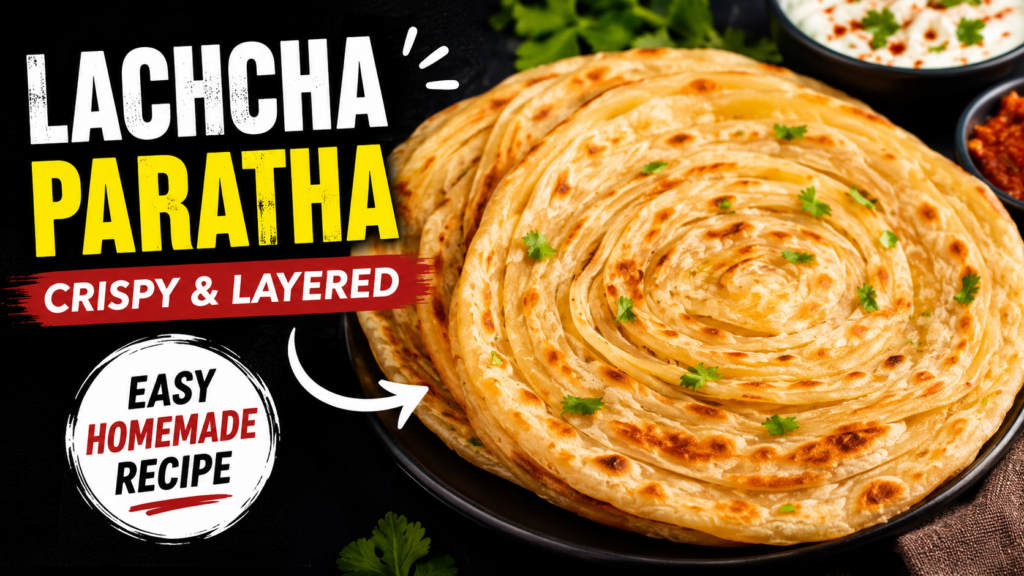
Lachcha Paratha Recipe: Crispy Layered Flatbread You Can Make at Home
Kaushik Brahmakshatriya
Published On 09 June 2026.
Lachcha Paratha Recipe
Lachcha Paratha is one of India’s most beloved flatbreads — flaky, crispy on the outside, soft on the inside, and loaded with beautiful spiral layers. Whether you pair it with a rich dal makhani, a creamy paneer curry, or simply a dollop of butter, this layered bread never fails to impress. The best part? You don’t need a tandoor or restaurant-grade equipment. With the right technique and a little practice, you can master this at home on a regular tawa.
What is Lachcha Paratha?
The word lachcha means “layers” in Hindi, and that is exactly what sets this paratha apart from a plain chapati or stuffed paratha. The dough is rolled, folded, and coiled in a special way before being flattened again — creating dozens of thin, crispy layers when cooked. It is a staple in North Indian restaurants and dhabas but is equally popular in homes across Gujarat, Punjab, and Delhi.
Ingredients
Ingredients for Lachcha Paratha (Serves 4)
| Ingredient | Quantity | Notes |
| Whole wheat flour (atta) | 2 cups | Use fine-milled atta for soft layers |
| All-purpose flour (maida) | ½ cup | Optional, adds crispiness |
| Salt | ½ tsp | Adjust to taste |
| Oil or ghee (for dough) | 2 tbsp | Ghee gives richer flavour |
| Warm water | As needed | Approx. ¾ cup for kneading |
| Ghee or butter (for layers) | 3–4 tbsp | Applied between rolled layers |
| Dry flour (for dusting) | As needed | Prevents sticking while rolling |
Step-by-Step Method
1. Prepare the Dough
Mix whole wheat flour, maida, salt, and oil in a large bowl. Add warm water gradually and knead into a soft, smooth dough. It should not be sticky. Cover with a damp cloth and rest for 20–25 minutes. Resting is crucial — it relaxes the gluten and makes rolling much easier.
2. Roll and Layer
Divide the dough into equal balls. Roll each ball into a thin circle (like a roti). Apply a thin, even layer of melted ghee across the entire surface. Sprinkle a pinch of dry flour on top. Now fold the circle like a fan — accordion-style — into a long strip. Roll this strip into a tight coil (like a snail shell). Flatten gently with your palm and dust lightly with flour.
3. Roll Again
Roll each coiled ball gently into a medium-thickness circle. Don’t press too hard — you want to preserve those layers inside.
4. Cook on Tawa
Heat a tawa on medium-high flame. Place the paratha on it. Once small bubbles start appearing on top, flip it. Apply ghee on the cooked side. Flip again and press gently with a spatula. Cook until both sides are golden brown with visible crispy spots. Serve immediately.
Cooking Tips for Perfect Lachcha Paratha
Common Mistakes vs. Correct Technique
| Common Mistake | Why It’s Wrong | Correct Technique |
| Rolling too thin | Layers merge and become flat | Keep medium thickness after final roll |
| Skipping rest time | Dough tears while rolling | Always rest dough for minimum 20 minutes |
| Less ghee between layers | Layers don’t separate properly | Apply ghee generously on each fold |
| High flame throughout | Burns outside, raw inside | Start medium-high, finish on medium |
| Rolling coil too hard | Crushes the spiral layers | Roll gently with light pressure |
Serving Suggestions
Best Dishes to Pair with Lachcha Paratha
| Pairing | Cuisine Style | Occasion |
| Dal Makhani | North Indian | Dinner |
| Paneer Butter Masala | Restaurant Style | Special meals |
| Chole (Chickpea Curry) | Punjabi | Weekend brunch |
| Baingan Bharta | Dhaba Style | Lunch |
| Plain Butter + Pickle | Simple | Quick breakfast |
Frequently Asked Questions (FAQ)
Q1. Can I make Lachcha Paratha without maida?
Yes, you can use 100% whole wheat flour (atta). The paratha will be slightly denser but equally delicious and healthier. Adding a tablespoon of semolina (sooji) to the atta adds a light crispiness without using maida.
Q2. What is the difference between Lachcha Paratha and Malabar Parotta?
Both are layered flatbreads, but the technique and flour differ. Lachcha Paratha is primarily made with whole wheat flour and uses a fan-fold and coil method. Malabar Parotta is made with maida, uses an extended stretching technique, and has a chewier, softer texture.
Q3. Can I store Lachcha Paratha dough in advance?
Absolutely. After kneading, coat the dough lightly with oil, wrap it in cling film, and refrigerate for up to 24 hours. Bring it to room temperature before rolling. This is great for meal prep and saves time on busy days.
Q4. Why are my layers not separating when cooked?
The two most common reasons are insufficient ghee between the folded layers and rolling the final paratha too flat. Ensure each layer gets a generous smear of ghee before folding, and roll the final coil gently to keep the spiral intact.
Q5. Is Lachcha Paratha healthy?
When made with whole wheat atta and moderate ghee, it is a nutritious flatbread providing fibre, carbohydrates, and healthy fats. It becomes heavier in calories if excess butter or ghee is added at serving. Pairing it with vegetable curries or dal balances the meal well.
Final Thoughts
Lachcha Paratha is one of those recipes that rewards patience and practice. The fan-fold and coiling technique may feel unfamiliar on the first attempt, but by the second or third paratha, you will have it perfected. The result — a golden, flaky, aromatic flatbread straight off the tawa — is well worth every effort. Try it this weekend and bring a little dhaba magic straight to your kitchen.
