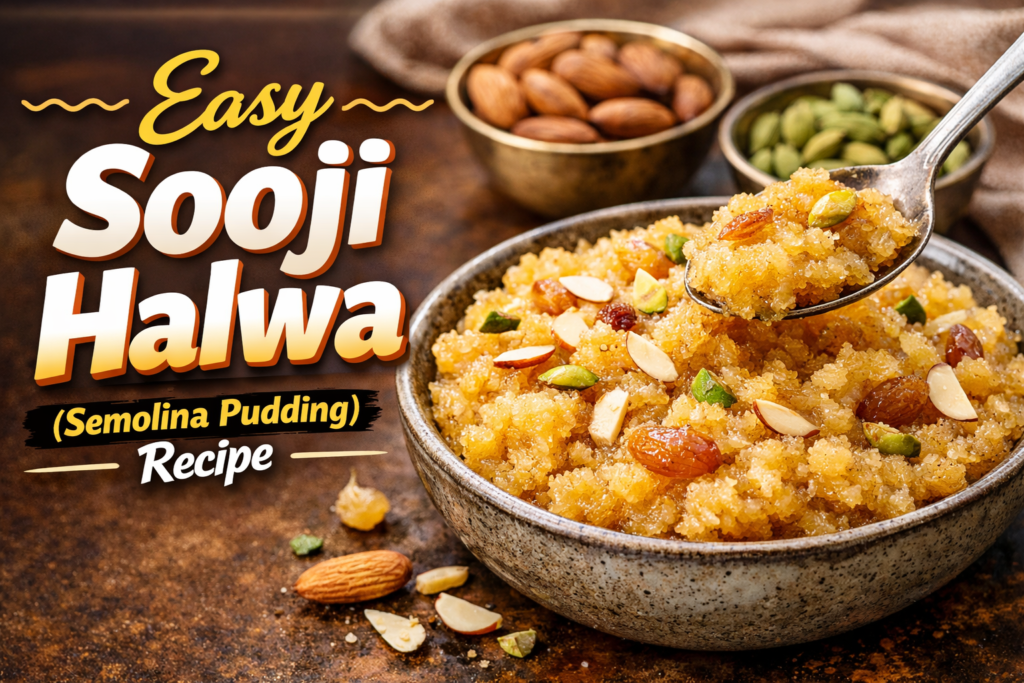
Easy Sooji Halwa (Semolina Pudding) Recipe
02, February 2026. By -Kaushik
If there is one dessert that defines the heart of an Indian household, it is Sooji Halwa. Whether it’s a festive celebration, a rainy afternoon, or a quick craving for something sweet, this golden, buttery semolina pudding is the ultimate solution.
The beauty of Sooji Halwa (also known as Sheera or Rava Halwa) lies in its simplicity. With just four basic pantry staples—semolina, ghee, sugar, and water—you can create a dessert that is aromatic, fluffy, and incredibly soul-satisfying.
Why You’ll Love This Recipe
Quick & Easy: It takes less than 20 minutes from start to finish.
Beginner-Friendly: No complex sugar syrup consistencies to worry about.
Versatile: You can adjust the sweetness and richness to your liking.
Ingredients You’ll Need
To get that authentic “melt-in-your-mouth” feel, the secret is the ratio. Traditionally, many use a 1:1:1 ratio for semolina, ghee, and sugar, but we’ve balanced this recipe for a modern palate.
Sooji (Semolina/Rava): 1 cup (fine or medium variety works best)
Ghee (Clarified Butter): ½ cup to ¾ cup (depending on how rich you want it)
Sugar: ¾ cup (increase to 1 cup for more sweetness)
Water: 3 cups (using a 1:3 ratio ensures the halwa stays soft even after cooling)
Cardamom Powder: ½ tsp
Nuts: 2 tbsp (chopped almonds, cashews, and raisins)
Saffron: A pinch (optional, for a golden hue)
Step-by-Step Instructions
1. Prepare the Liquid Base
In a saucepan, combine the water and sugar. Bring it to a gentle boil just until the sugar dissolves. If you are using saffron, add it here. Keep this mixture hot on low flame while you roast the sooji.
2. Toast the Nuts
Heat 1 tablespoon of ghee in a heavy-bottomed kadai (wok). Add your chopped nuts and fry until they turn golden brown. Remove them and set aside.
3. Roast the Sooji (The Most Important Step)
Add the remaining ghee to the same pan. Once melted, add the sooji. Roast it on low-to-medium heat, stirring constantly. This is where the magic happens. You want the sooji to turn a light golden brown and release a nutty aroma.
Pro Tip: Do not rush this step. If the heat is too high, the sooji will burn on the outside and stay raw on the inside.
4. Combine
Slowly pour the hot sugar-water mixture into the roasted sooji. Be careful, as it will splash and steam. Stir continuously to prevent lumps from forming.
5. Simmer and Thicken
Keep stirring on low heat. The sooji will quickly absorb the water and start to thicken. Add the cardamom powder and the fried nuts.
6. The Finishing Touch
Cover the pan with a lid and let it cook on the lowest heat for 2 minutes. This “steaming” process makes the halwa extra fluffy. Once the ghee starts to separate from the sides of the pan, your Sooji Halwa is ready!
Tips for Success
The Roast: The darker you roast the sooji, the deeper the flavor and color of your halwa will be.
Hot Water: Always add hot water to hot sooji. Adding cold water can result in a sticky, clumpy texture.
Milk Variation: For a creamier version, you can replace half of the water with whole milk.
Serving Suggestions
Sooji Halwa is best served warm. In India, it is often paired with savory black chickpeas (Kale Chane) and fried Poori for a classic festive breakfast.
Disclaimer :
The recipes and nutritional information shared on this Blog are for informational purposes only. While I strive to provide accurate instructions, results may vary based on individual cooking skills, equipment, and ingredient quality.
